
Writing poetry isn’t easy; it takes application and a capacity to draw on inspiration. At the same time, it shouldn’t be mystified. In this regard, the attitude of many would be different if they understood that poetry appears in the lyrics of songs and in nursery rhymes. Poetry is thus more widely present as a human form of expression and – by extension – poetry writing is more widely accessible as a craft or practice.
Here are some tips for those interested in writing poetry or developing their budding poetry skills.
Firstly, if you want to be a writer, you have to put pen to paper. You cannot be a writer of poetry without actually writing. In the old days, the advice was to use a journal or scrapbook. These days, youth write in the Notebooks or some other space on their phone. Many people think they need ‘guidance’ about the elements of a poem before writing. That would be great if you could get that.
However, you don’t need any technical advice as a prerequisite to writing. You can draw from you’re the relevant knowledge and experience – from powerfully-written songs, from nursery rhymes and from how people such as mbongi have been sharing ideas and telling stories for ages. From these, you already know the basics such as using line breaks, creating stanzas for new ideas and deploying devices such as rhyme and rhythm. Just begin to write. Far too many people who say they want to write and want to publish, but don’t take the first step. They ask for all kinds of advice but seem to miss the simplest tip; you must actually write. When you do write, regardless of how your inner critic belittles what you have produced, you have content to work with or the seed for trying something new. For most aspirant writers, referring back to their journal or scrapbook after some time is almost always a rewarding exercise.
Secondly, you need to read poetry. Read (or listen to) at least three different types of poetry. There’s much to choose from: spoken word poets, poets in the African tradition like Mazise Kunene or S.E.K. Mqhayi, poems from other countries, verses in old school poetry textbooks such as Inscapes and so on. And many of these poems are available on the internet.
Reading poetry helps you grasp what poetry appeals to you. On a second or third reading of a poem, you can pick up devices being used by poets: How do they use sound or repetition? How do they use verses or stanzas to separate main ideas in a poem? How do they play with symbolism, comparison or exaggeration feelings, ideas or a story? In what ways do they use imagery that others can relate to but that simultaneously pushes the reader’s imagination to seeing old things in new ways? Reading poetry broadens the mind about the different ways words can be used in a poem to convey feelings or ideas.
Thirdly, as part of poetry practice, try to take part in poetry activities that involve the use of prompts. A prompt is a word or an image used to jump-start your writing. Various Facebook-based poetry groups issue prompts and, for example, poetrypotion.co.za, challenges poets with a daily prompt. Such exercises help to exercise your poetry muscles. The outputs from such activity do not necessarily result in complete or completed poems. I find that, playing with prompts, I only generate a completed poem 40% of the time; and even that is after honing my efforts a week or two later. The one advantage with the prompt is that you can bring pen to paper without waiting for a flash of inspiration or being dependant on a surge of strong emotions. The other advantage is that, often, you are engaging together with other writers. In that engaged process, you gain positive energy as you observe other writers working with the prompt, flexing their creativity.
Here are some exercises to get you started: Free write for 7 minutes on a topic of your choice. Once you write your first word, don’t stop until the time is up. Write whatever is in your mind at the time. This is called free writing. In some exercises I’ve been involved in participants have written about – for example – the fear of the blank page, an unresolved issue, on ‘inspiration’or the kind of day it was. In the next step, read through what you’ve penned, underlining as many striking phrases as you can. Select at least four. Now (either through rewriting or by using a scissors) place the phrases on different lines on a page. Move them around until you feel comfortable with the placing, and so that it resembles a poem. Add a title. After a few days, look at the poem you have constructed again and make any changes, for example adding, taking away words or replacing a word with a more appropriate one.
Exercise on place: As part of the warm up, list three places you have lived in or spent time at and that left an impression with. Next to each place name, write a sentence or a phrase about what you liked or disliked about the place. Then, thinking of that place as a person, write a poem of between four and ten lines about the place. The lines could refer to what the place means, its qualities or about the feelings it invokes in you.
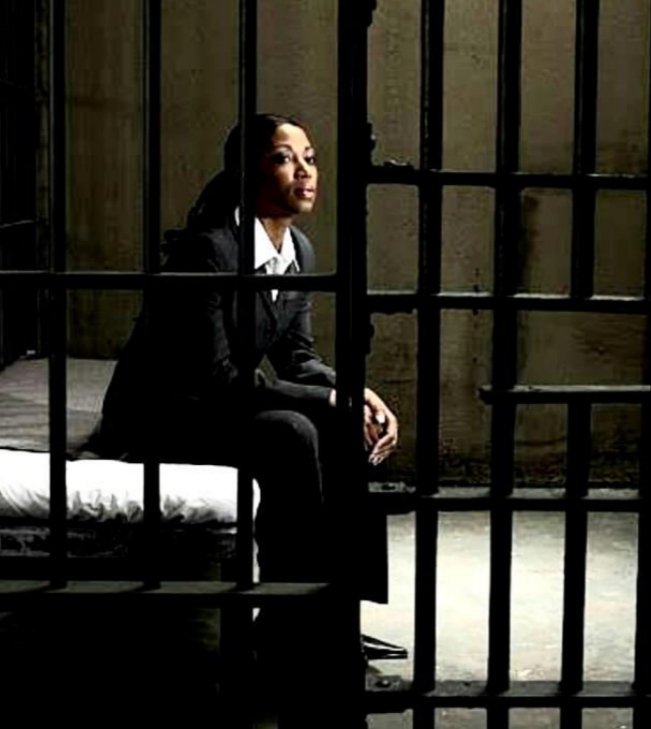
Exercise three: Look at the image below. You don’t know anything about the details. However, you allow your imagination to fill in details about her: who is she, why is she there, what thoughts are swirling in her head? Now write a poem of four lines about the image. It can be from her perspective or from the perspective of someone close to her; from inside the four walls or outside.
Revising and editing are an integral part of creating poems. In revising, you strive to retain the initial idea or feelings or sense of inspiration that inspired you. At the same time, you take the opportunity to make changes. You might want to make the poem less long-winded and punchier by deleting superfluous words – or by re-ordering the lines. You may want to replace a word with a more appropriate one. Additionally, you want to extract clichés – those tired phrases that numb the mind – and replace them with fresh images, for example replacing “as cold as ice” with “as cold as a watermelon left outside in a Free State winter.”
About Frank Meintjies
Based in Johannesburg, Frank Meintjies was raised in an under-resourced community in KZN and, in his youth, worked in community organisations in Pietermaritzburg. He worked in the field of social development and hasbeen engaged as a Research Fellow at Wits University’s School of Governance. He has also worked in government, in the private sector and in organisations advancing community development.
He has also been engaged in cultural organisations such as the Congress of SA Writers, the visual arts body VANSA (as a member), and Vakalisa Arts (part of the collective). He has been involved in steering committees of a music initiative (Zimology Institute), a performing arts organisation (Performing Arts Workers Equity, PAWE) and arts journals (Staffrider and Calabash).
Frank is a skilled facilitator, with a Master Instructor certification from Deloitte Consulting. He has a diploma in counselling, has a certificate in Gender and Development (from London University’s UCL), has a certificate in ‘Working With Groups’ from an institution linked to the Tavistock Institute and has designed and implemented a southern-African leadership course for the British Council (SA). Frank also has business and entrepreneurial knowledge — he has been directly engaged in enterprise projects such as the launch of a radio station (he was chair of Mopani Media which conceptualised the radio station Y-FM), a social housing project and his own consultancy.
In 2020, he ran – for a cohort of 60 poets under 35 years of age – a poetry skills course called Power of the pen: Emergent Voices. In 2022, he ran a course consisting of five master classes on short story writing which covered topics such as character, the story arc, ‘show don’t tell’, ‘point of view’, writing scenes and the place of ‘story’ in African culture. Frank was co-editor of the multi-disciplinary book, Voices of the Transition. With Mi Hlatshwayo, he edited a special Staffrider edition focused on Worker Culture. Frank remains active in cultural work: he was interim President of the National Writers Association of South Africa. Frank contributes to the world of poetry through participation in public readings/spoken word events. Frank’s creative writing has been included in several South African anthologies –his work was used in collaboration projects of William Kentridge’s Centre for the Less Good Idea. Frank’s most recent poetry collection is Wind in The Trees; previously released poetry collections are Unfettered Days, Connexions and My Rainbow. Frank’s Afrikaans poetry can be seen and read here: https://ink.org.za/lede/frank/.
He has also written several children’s stories and short stories. These short stories and children’s stories continue to be widely read and can be accessed via the internet. Frank’s children’s stories include the following e.g. https://freekidsbooks.org/mystic-moon-saves-day-animal-story/ and https://live.fundza.mobi/home/fanz/essays/the-old-man-the-wise-woman-and-the-african-pot/). Others can be read here: https://live.fundza.mobi/writer-profiles/meet-the-fanz/frank-meintjies/. Frank has in recent times penned a range of culture-related articles. This includes pieces on the emergence of worker culture ( https://asai.co.za/an-explosion-of-worker-creativity-in-natal-cwlp/); on the Katlehong Arts Centre, on the renowned Drum-era writer Can Themba (https://frankmeintjies.wordpress.com/2021/10/19/can-themba-giving-voice-through-journalism-and-literature/); on renowned poet Don Mattera (https://www.timeslive.co.za/sunday-times-daily/opinion-and-analysis/2022-07-22-frank-meintjies-don-mattera-constantly-shuffled-the-deck-between-anger-and-compassion/), and; on James’ Matthews’ short stories (https://herri.org.za/8/frank-meintjies/). He was a collaborator in a project on social transformation through the arts (see https://stias.ac.za/fellows/frank-meintjies/); he was also a collaborator on and co-author of the book Changing Our Worlds (see Changing our Worlds – new publication in the STIAS Series – Stellenbosch Institute for Advanced Study).
 PUBLISH'D AFRIKA