PUBLISH’D AFRIKA Online Literary Magazine – September 2026 Issue
INSIDE THE JUDGES’ ROOM
Are you polishing your submission for the 6th Gerald Kraak Anthology and Prize? This webinar is for you.
For the first time in the history of the Prize, we’re hosting a webinar aimed at bridging the gap between entrants and the judges, giving writers the opportunity to gain insight into the judges’ decisions and refine their submissions before the submission deadline on the 18th of August. We’re pleased to announce that this year’s judging panel includes Nigerian author and Professor of English Unoma Azuah (Head Judge), whose research focuses on LGBTQ+ rights in Africa. Joining her on the panel are South African journalist, editor and literary critic Shaun de Waal and Ugandan human rights advocate, poet and scholar Stella Nyanzi.
Note: Attendance is optional, but highly recommended. The insights shared in this session could give your submission a competitive edge.
What to expect: An overview of the Gerald Kraak Anthology and Prize. An introduction to this year’s judging panel. Insights from all three judges on what makes a submission stand out, the qualities they look for in fiction and non-fiction, what works best within the 15,000-word limit, common pitfalls to avoid and how to present a strong submission. Reflections and advice from a previous winner. A live Q&A with the judges.
If you have any questions, please include them with your RSVP. Our judges will answer them during the Q&A session.
Date: Tuesday, 11 August 2026
Time: 19:00–20:30 SAST
Platform: Zoom
RSVP to diolan@jacana.co.za by Friday, 7 August 2026.

Celebrating Judge Dingake’s Nomination to The Hague
When Judge Oagile Bethuel Key Dingake came to PUBLISH’D AFRIKA to publish three books in two years, we had no idea of the stature behind the manuscripts. He is not only a Botswana legal eagle. He is a jurist who has presided over the High Courts of Botswana, Seychelles, Sierra Leone, Papua New Guinea, and more. He has also been elected chairperson of the Africa Judges and Jurists Forum (AJJF) in June 2026.Judge Dingake has also been Justice of the High Court and Industrial Court of Botswana, where he also acted as a Justice of the Court of Appeal. An accomplished academic and jurist, Justice Dingake holds a Doctor of Philosophy (PhD) in Law from the University of Cape Town, a Master of Laws (LLM) from the University of London, and a Bachelor of Laws (LLB) from the University of Botswana. He holds professorial appointments at the University of Cape Town, James Cook University, and San Beda University in the Philippines, where he teaches Constitutional Theory at doctoral and postgraduate level.
Justice Dingake is internationally recognised for his contributions to constitutionalism, human rights, HIV and health law, gender justice, and social justice. Today, Africa waits with pride. Justice Dingake has been nominated to the International Court of Justice in The Hague, the highest honour for any judge in the world. The nomination, a first for Botswana, represents a milestone for the country in contributing to top-tier international judicial governance.
An African son, born and raised in Bobonong, Botswana. All the best, Justice Oagile Bethuel Key Dingake. PUBLISH’D AFRIKA and all its subsidiaries stand with you, together with the rest of Africa.
The outcomes of nominations and the subsequent elections for the International Court of Justice (ICJ) are scheduled to be announced in November 2026 during the 81st session of the United Nations General Assembly.
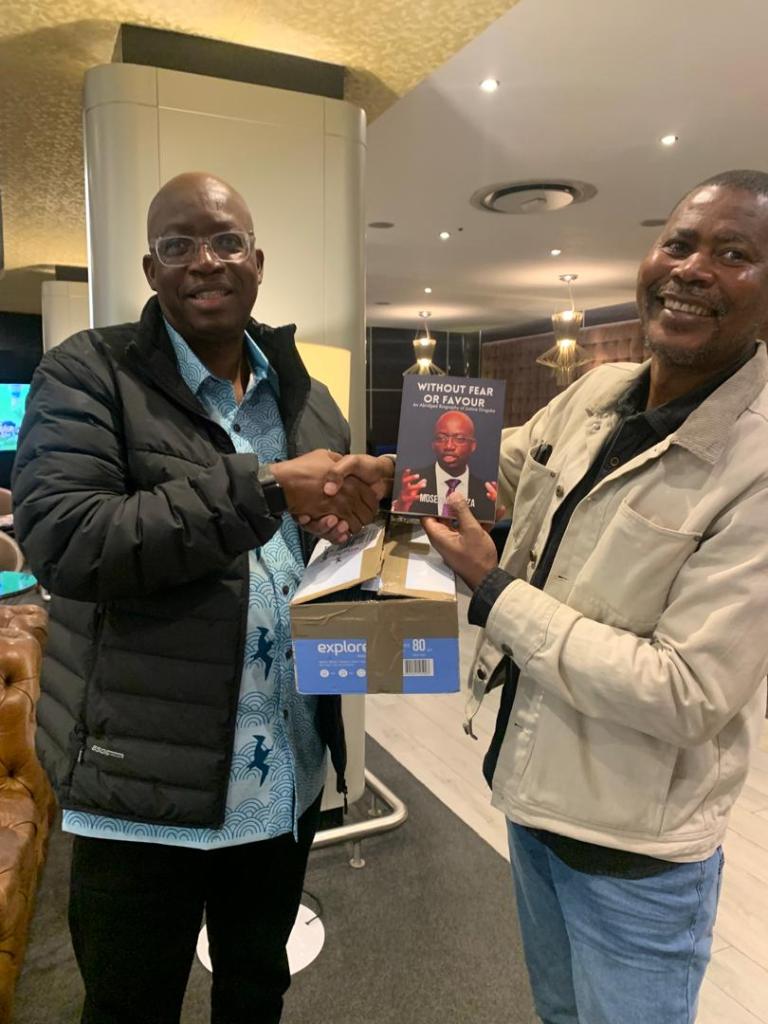
Photo: (Left) Judge Dingake receiving copies of his book, Without Fear or Favour, from PUBLISH’D AFRIKA Director, Thokozani Magagula, at The Maslow Hotel in Sandton.Read more on Judge Dingake by clicking on the link below:https://publishdafrika.com/2026/01/28/publishd-afrika-online-literary-magazine-february-2026/
PUBLISH’D AFRIKA Online Literary Magazine – August 2026 Issue

How to Get Your Book Adapted into a TV Series or Film – Guide by Mbuyiselo Vilakazi

Many authors dream of seeing their stories come alive on screen. While there is no guaranteed formula for getting your book adapted into a television series or film, there are practical steps you can take to increase your chances.
1. A Producer May Discover Your Book
Sometimes the journey begins when a producer, production company, or broadcaster reads your book and sees its potential for adaptation. This is why marketing your book is just as important as writing it.
2. Understand Your Rights
Before pursuing an adaptation, determine who owns the adaptation rights.If your book is self-published, you will usually retain more control over the rights, making negotiations simpler.If your book was published through a publishing house, carefully review your publishing agreement. Some contracts allow authors to retain film and television adaptation rights, while others grant certain rights to the publisher.
It is important to note that being the author of a work does not automatically mean you own every intellectual property right associated with it. Ownership depends on the circumstances under which the work was created and the terms of any agreements that were signed.
Always seek legal advice before entering into adaptation negotiations.
3. Make Your Book Visible to the Film and Television Industry
Invite Industry Professionals
When hosting book launches, literary festivals, or public discussions, consider inviting producers, directors, screenwriters, and development executives.
Share Copies of Your Book
Send copies—physical or digital—to people working in television and film. However, remember that receiving a copy does not create an obligation to read it or adapt it.Create Networking Opportunities
Host or participate in book club discussions, literary events, and storytelling forums. Many producers are avid readers, and meaningful industry relationships often begin in unexpected places.
Reach Out Professionally
You may send professional emails to production companies, accompanied by a synopsis and information about your book. Ensure your approach is concise and respectful.
4. If a Producer Is Interested
If a producer expresses interest, discuss your level of involvement in the project.
Many authors negotiate consulting, associate producer, or executive producer roles. While these positions can provide greater involvement, they are not guaranteed and will depend on negotiations and the producer’s vision for the project.
5. Be Prepared for Changes
Books and television are different storytelling mediums.
A writing team may alter certain aspects of your book to make the story work on screen. This may include:
• Combining multiple characters into one.* Removing storylines that are difficult or expensive to film.
• Expanding minor characters.
• Creating entirely new characters.
A good example is when screen adaptations introduce new characters who help connect existing storylines or serve practical production needs.
Adaptation is not duplication; it is translation from one medium to another.
6. Produce the Adaptation Yourself
Authors do not always have to wait for someone else to adapt their work.
Step 1: Develop a Screen Concept
Identify whether your book works best as a feature film, limited series, telenovela, drama series, or another format.
Step 2: Create a Screenplay
Books and screenplays are very different. Work with experienced screenwriters or a writers’ room to transform the narrative into visual storytelling and dialogue.
Step 3: Produce a Pilot or Proof of Concept
If resources permit, create a pilot episode, teaser, or proof-of-concept trailer. This helps potential investors and broadcasters visualize the project.
Step 4: Pitch Broadcasters and Streamers
Approach broadcasters and streaming platforms such as:
• MultiChoice
• South African Broadcasting Corporation (SABC)
• Netflix
A strong pitch package usually includes:
• A synopsis
• Character biographies
• Series overview
• Pilot script
• Budget estimates
• Production plan
Step 5: Pitch Your Project
If decision-makers are interested, they may invite you to formally present your project.
Step 6: Commissioning and Funding
If a broadcaster or streamer commissions the project, they may provide funding for development and production.
However, commissioning agreements often involve significant rights negotiations. Depending on the deal structure, the broadcaster or platform may acquire some or all rights to the adaptation. Always obtain legal advice before signing any agreement.
Step 7: Consider Independent Production
If you have access to funding, you can independently produce your project and submit it to film festivals, markets, and distributors before seeking broadcast or streaming deals.
Final Advice
The most important investment an author can make is in professional legal support.
Before signing any publishing, option, licensing, commissioning, or production agreement:
• Consult an entertainment lawyer.
• Understand your rights.
• Negotiate your involvement.
• Protect your intellectual property.
A great book is the foundation, but understanding the business side of storytelling is what often determines whether that book successfully makes the journey from page to screen.
Mbuyiselo Vilakazi is a South African TV producer, filmmaker, and entertainment content creator. He holds a Masters in Intellectual Property Law from UCT and has made a name for himself producing reality TV and drama series, including The Real Housewives Ultimate Girls Trip, Lozakha, and Netflix’s The Polygamist.He frequently shares his behind-the-scenes insights, reviews, and industry updates with his loyal following across Instagram and TikTok.
African And European Poets Bond At New Lit Fest
NAIROBI, KENYA — On the evening of 29th May 2026, over thirty African poets and musicians performed in a high-energy three-hour show alongside five performance poets from Poland at Eugenia Park, off the Thika Superhighway. The intercultural event was part of the inaugural Asian Literary Festival in Nairobi, which took place on 28th, 29th, and 30th May.
The African performers who took part in the live-music-backed show included Griffins Ndhine, Caitline Shibo, Kevin ‘KNAMICS’ Lukachi, Alexander Nderitu, Raya Wambui, Onyango ‘Rixpoet’ Otieno, Nahida Esmail, Carolyne ‘Afroetry’ Acen, Michel Ongaro, Vivy Kabz, Mae Kikete, and Collins Mosigisi. The Polish delegation consisted of Katarzyna Szweda, Julia Fiedorczuk, Jakub Pszoniak, Mikołaj Poncyljusz, and Weronika Czyżewska-Poncyljusz.
Ahead of their first-ever visit to Kenya, the Polish artistes, who are part of a travelling performing poets ensemble called Café Europa, had published the poems of twelve African poets who were to perform with them on stage. However, having arrived in the country a couple of days prior to the event, they discovered more artistes who were then incorporated into the program. Speaking at the monthly AMKA Literature Forum on Saturday, 29th May, Weronika Czyżewska-Poncyljusz, the Director of Café Europa said:
‘I found poetry everywhere here (in Nairobi) and art. We had this amazing experience in a meeting in the National Theatre, with slammers. That’s why the Café Europa evening (performance) grew so much! Because we just met amazing people there. And whomever we spoke to was somehow engaged in the field of words or music or performance. For me, this was an experience of huge richness.’
At the National Theatre courtyard, Café Europa met and bonded with members of a long-running poetry forum dubbed Poetry After Lunch (PAL), which meets every Thursday. The European and African poets quickly bonded and, at one point, engaged in a ‘cultural exchange of names’. The visitors were assigned the names Nekesa, Otis, Shiku, and Kinuthia. The Eastern Europeans also gave Polish names to various audience members.
At the AMKA Forum, based at the Goethe-Institut in uptown Nairobi, co-host Mùthoni wa Gìchùrù asked: ‘So, how did you end up in Kenya?’
Weronika (pronounced ‘Veronika’) said: ‘It started with a meeting…in Sri Lanka. We met with a Sri Lankan poet and writer, Pramudith Rupasinghe…and when he said he has this platform called the Asian Literary Festival, and for him Café Europa is something that should be part of it, we thought, “Why not? Of course.” And since then, we have been trying to build a network of people who think like us. And here in Nairobi, Alexander Nderitu, who is the organizer of the Asian Literary Festival in Kenya, was open enough, courageous enough, to invite us. And we, of course, said, “Yes.”’
Weronika made no secret of the fact that they thoroughly enjoyed their visit and would like to return for even more cross-cultural collaborations:
‘We had an amazing event here in Nairobi. So now, it’s not only Café Europa, it’s actually “Café Europa Africa”. Which is in itself creating a new quality…My dream would be to, of course, come back here next year and have more poets involved in Café Europa with us. Maybe more events but also translations, co-operations (sic), other projects growing after it. Because, actually, that’s the only way to make our encounter matter.’
About The Asian Literary Festival
The Asian Literary Festival is an international literary and cultural movement founded by Sri Lankan novelist Pramudith D. Rupasinghe. It is the flagship initiative of The Asian Group of Literature, a global social enterprise comprising festivals, publishing, prizes, a literary agency, a literary magazine, and a house of literature. Previous editions have been held in Brussels, Bhubaneswar, and Gampaha.
Adopt-An-Author Hall of Fame
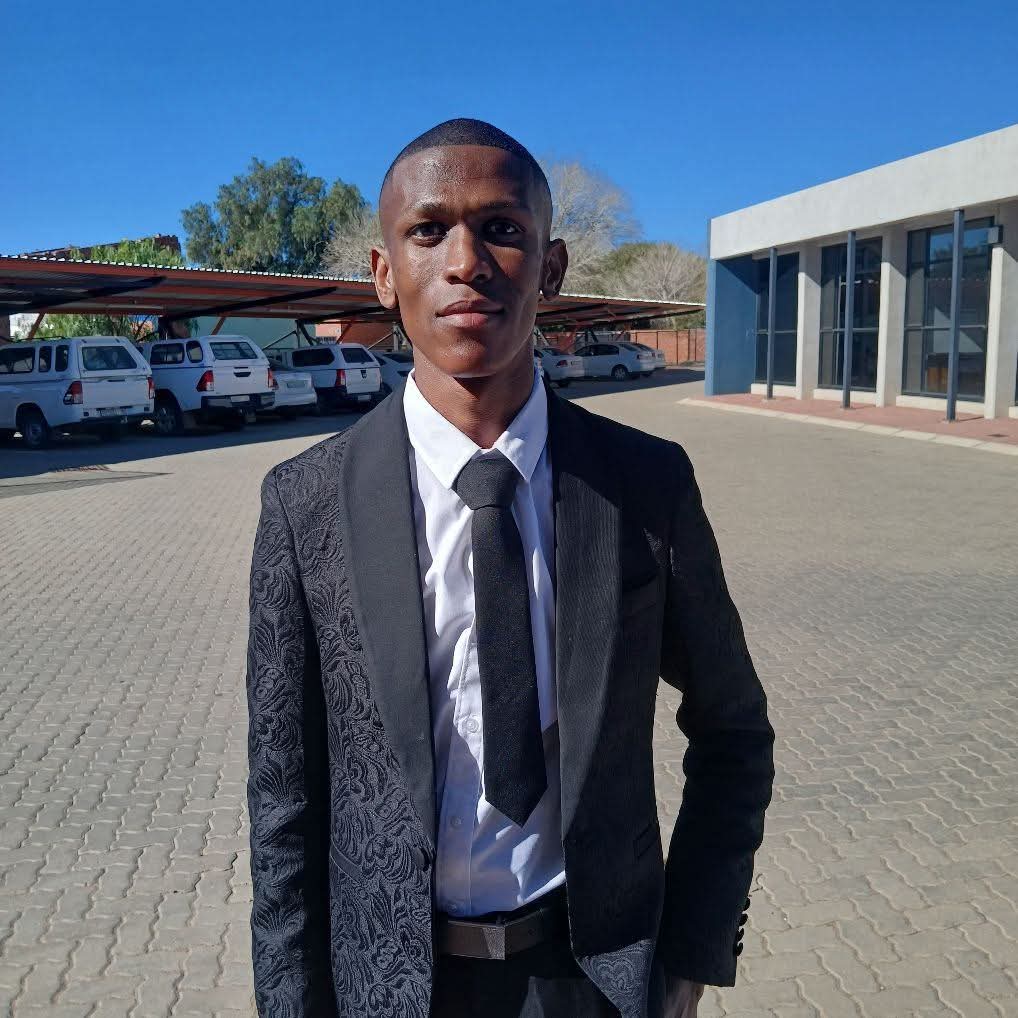
The Price of Freedom by Mosimanegape Leeuw
At a time when African literature is too often asked to explain itself, The Price of Freedom by Mosimanegape Leeuw refuses to translate. It insists.
Mosimanegape Leeuw is one of six gifted authors whose books were published through PUBLISH’D AFRIKA’s Adopt-An-Author Program for 2025/26. The program was funded by the National Arts Council, an agency of the Department of Sport, Arts and Culture.
Mosimanegape’s debut novel does not ask for permission to speak about broken systems, buried histories, and the cost of daring to hope. It demands that we sit in the ash and watch a young man decide what he is willing to lose so that others might breathe.
The Author: A Voice Forged Between Poetry, Law, and the Streets of the Northern Cape
To understand the novel, you must understand Mosimanegape Leeuw. He is not a writer who arrived at social themes through research. He arrived through living. Born in the Northern Cape and rooted in Kimberley’s “scarred landscapes,” Leeuw carries the perspective of a poet, a youth advocate, and an aspiring legal professional. He has already published three poetry collections — Thoughts and Tears, Behind the Dark, and From Darkness to Light—and a motivational work, It Takes a Village to Raise a Child. That lineage matters. Poetry taught him compression. Youth advocacy taught him urgency. Law taught him structure. His work consistently explores mental health, personal struggle, resilience, hope, and healing. These are not abstract themes for Leeuw. As a member of the Youth Advisory Panel for The Girl Effect, he spends his days amplifying young voices, advocating against gender-based violence, HIV stigma, and the neglect of vulnerable children. He speaks publicly, writes relentlessly, and organises locally. His vision is national and international: justice, equality, opportunity for young people.
“The Price of Freedom is the natural evolution of that life,” says PUBLISH’D AFRIKA Director, Thokozani Magagula. “The novel takes the lyric intensity of his poetry and channels it into narrative. It takes the legal mind he is training and applies it to questions of justice beyond the courtroom. It takes the youth advocate and gives him a protagonist who embodies every teenager told to ‘wait’ for freedom.” When Leeuw writes through Sma, he is not imagining a character from a distance. He is writing the questions he hears daily from young South Africans: If the system won’t change, who will? If I rise, what will it cost me? That convergence of lived advocacy and literary craft is rare. Many novels talk about revolution. Few are written by authors who spend their week fighting for mental health awareness and their nights drafting scenes about sacrifice. That authenticity gives the book its moral weight.
The Work: Freedom Redefined as Sacrifice, Not Slogan
The novel introduces us to Sma, a young man hardened by poverty and betrayal, who stands between the ashes of a broken nation and the dawn of a new beginning. The setting is Kimberley, but the landscape could be any post-colonial city where promises outpace progress. What makes Sma unforgettable is that Leeuw refuses the myth of the flawless hero. Sma does not rise because he is chosen. He rises because silence becomes unbearable. He carries a flag, but more importantly he carries the burden of an entire generation’s dreams. Leeuw’s central thesis is deceptively simple and brutally honest: freedom is not born in speeches or promises, but in sacrifice. Every step Sma takes toward justice costs him a piece of himself—love, friendship, and peace slowly fading into the smoke of revolution. “This is where the novel becomes thought-provoking,” says Magagula. “Most narratives about resistance celebrate victory. Leeuw interrogates the invoice. What happens to the self when the cause demands everything? Can a man free his people if he loses the capacity to live among them?” The question Leeuw poses—“how far would you go for the freedom of your people—and what would you lose along the way?”—is not rhetorical. It is ethical. It forces readers, especially young readers, to move beyond performative activism and confront the private grief that public change requires. In a literary climate saturated with dystopias and allegories, “The Price of Freedom” feels radical because it is grounded. The battles are fought in the streets and within the soul. The revolution is cinematic, yes, but it is also intimate. Leeuw paints with lyrical power and raw honesty the portrait of a man and a nation trying to reclaim its voice. The lyricism comes from his poetic training. The rawness comes from his refusal to sanitize struggle.
Literary Contribution: A Northern Cape Voice in the Canon of Resistance Literature
South African literature has a rich tradition of resistance writing, from Breytenbach to Mda to Mpe. But too often the narrative center remains urban, academic, and coastal. Leeuw writes from Kimberley, from the Northern Cape, from the interior spaces where history is felt as dust and drought as much as policy. That geographic specificity expands the canon. He gives readers a freedom fighter who is not from Johannesburg or Cape Town, but from a place scarred by both mining and marginalisation. In doing so, he reminds us that the fight for dignity is not metropolitan. It is national.
Stylistically, the novel bridges two worlds. The “lyrical power” honours Leeuw’s poet identity. Sentences breathe. Images linger. Yet the narrative drive honours his legal and advocacy training. Scenes move. Stakes escalate. This hybrid creates accessibility without sacrificing depth. Young readers who might not pick up dense political fiction will stay for Sma’s story. Readers who come for literature will stay for the moral complexity.
Thematically, the book connects directly to urgent contemporary conversations: mental health under political pressure, the psychological cost of activism, the tension between personal love and collective duty, and the way hope can tremble without breaking. Leeuw does not offer easy redemption. He offers redemption that is earned, and therefore believable. In a moment when young people are exhausted by empty inspiration, that honesty is a form of respect.
Why this Book, Why Now
Literary awards often ask: Does this work shift us? The Price of Freedom shifts us from slogans to sacrifice. It shifts us from celebrating heroes to understanding humans. It shifts us from coastal narratives to Northern Cape truths. It shifts us from asking “What is freedom?” to asking “What will freedom cost you, and are you willing to pay it?” Mosimanegape Leeuw has written a novel that is deeply moving, cinematically vivid, and ethically uncompromising. He has done it as a poet, an advocate, and a young leader committed to justice and equality. He has done it without losing hope, even when his character’s hope trembles.
For its moral courage, its lyrical craft, its expansion of South African literary geography, and its potential to spark dialogue among the very youth it portrays, The Price of Freedom is not just a story about a man who refuses to bow. It is a book that refuses to let us bow either—to apathy, to silence, or to the idea that freedom comes cheap.
54 “No”s and a Netflix Yes
How Sue Nyathi and Marcia Hutchinson Turned Rejection Into Revolution
Rejection letters don’t make headlines. They arrive quietly, fold into your desk drawer, and stack up like weights. But every once in a while, one “yes” arrives late, loud, and changes everything. Ask Sue Nyathi. Ask Marcia Hutchinson. Their stories aren’t just about books. They are about refusing to let “no” have the last word.
The Book That Wouldn’t Die
In 2012, a Zimbabwean writer named Sue Nyathi released a debut novel called The Polygamist. It was messy, bold, and unafraid. It followed Jonasi Gomora, a wealthy businessman played now by Sdumo Mtshali on screen, and his wife Joyce, played by Gugu Gumede, as they navigated power, infidelity, and the cost of it all. The book divided readers from page one. It was meant to. But the publishing world wasn’t ready. Bookstores turned it down. Distributors passed. Nyathi, watching doors close, made a decision most authors dread: she self-published. “My only wish was to write a book and then get help to produce and sell it,” she admitted on Instagram recently. She printed it, pushed it, and let it live on its own terms. Then she waited. For 13 years.
Hope has a way of thinning over a decade.
When a production company finally asked about turning The Polygamist into a drama series, Nyathi almost said no. She had lost hope, she confessed. Saying “yes” meant risking more rejection, more disappointment. But she took the chance anyway. That chance is now a 22-episode series on Netflix. Directed by Akin Omotoso and produced by Stained Glass Productions, it is being called one of the biggest local productions the company has made. Jonasi Gomora is back, this time on screens across the African continent and beyond, surrounded by a cast including Celeste Ntuli, Kwanele Mthethwa, Luyanda Zwane, Kenneth Nkosi, Wonder Ndlovu, and Noluthando Shabalala. The show sparked immediate debate. Social media lit up with comparisons between Jonasi and real-life powerful men. Viewers argued about masculinity, wealth, and what happens when power goes unchecked at work, in society, and inside the home. “My book, which I thought was small, has done wonders for me, and now I am known overseas,” Nyathi said. The girl who self-published because no one else would is now answering questions from readers halfway across the world.
54 Rejections, Then History
If Nyathi’s story proves that time can turn a “no” into a cultural moment, Marcia Hutchinson’s proves that persistence can rewrite literary history.
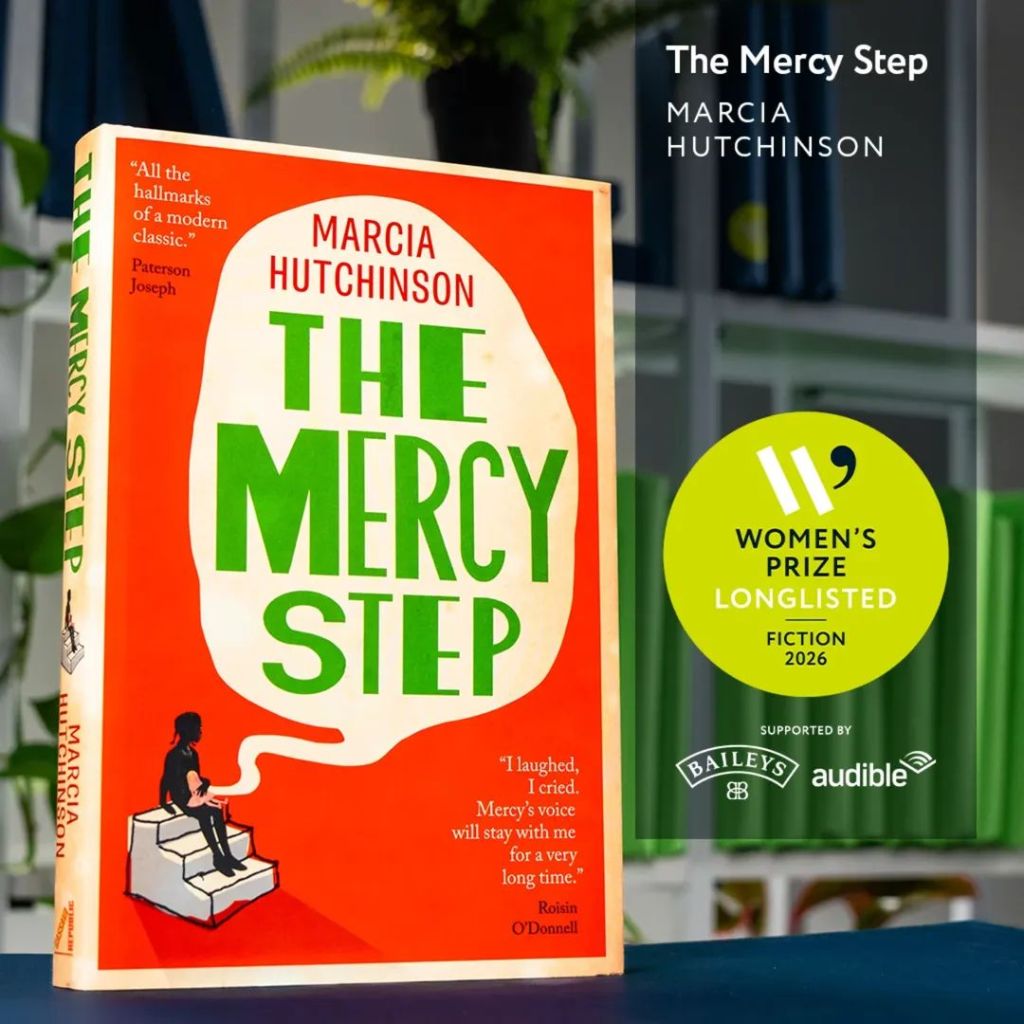
Hutchinson’s debut novel, The Mercy Step, follows Mercy, the youngest child of a Windrush-generation Jamaican family in 1960s Bradford. It is a story of cold mill towns, inadequate housing, a father’s violence, and a mother’s fierce love. It is also pungent with wit and colour, even when it refuses to look away from poverty and systemic abuse. Hutchinson wrote from her own difficult childhood. She became a full-time writer at sixty.
Before Cassava Republic Press said “yes”, fifty-four publishers said “no”. Fifty-four. Imagine opening that fifty-fourth rejection email at sixty years old, after a lifetime of waiting. Most people would stop. Hutchinson didn’t.Cassava Republic’s founder Bibi Bakare-Yusuf saw what others missed. “From the very first pages, I knew this was something extraordinary,” she said. “Mercy’s voice, so alive, so precise, so achingly real, is one that stays with you. The fact that fifty publishers passed on this novel only deepened my conviction that we had to publish it.” That conviction paid off. The Mercy Step won the Discover Prize at the 2026 British Book Awards. Hutchinson took the stage and quoted Coolio. The room was hers. Then the novel was shortlisted for the 2026 Women’s Prize for Fiction, placing Hutchinson’s debut among six novels selected from hundreds of submissions. Cassava Republic became the first Black-owned African independent publisher to reach the shortlist in the prize’s 30-year history. In their twentieth year, no less.
Even though the prize ultimately went to Virginia Evans’ The Correspondent, the impact was already made. “Being shortlisted placed Marcia Hutchinson’s debut among six outstanding novels,” Cassava Republic reflected. “It is a recognition that speaks to the power of the story.” More than that, it speaks to the power of refusing to quit.
Why “No” Isn’t The End
Look at both stories side by side and a pattern emerges. Rejection isn’t proof you are wrong. It is proof you are early. Nyathi’s book was rejected because it was uncomfortable. Hutchinson’s was rejected because it didn’t fit the mold. Both were too specific, too honest, too rooted in lives the mainstream hadn’t learned to see yet. Sue Nyathi thought her book was “small.” Fifty-four editors thought Hutchinson’s manuscript wasn’t commercial enough. Time proved them wrong. Netflix turned The Polygamist into a continental conversation starter. The Women’s Prize shortlist turned The Mercy Step into a landmark for Black-owned publishing. The stories didn’t change. The world did. Bibi Bakare-Yusuf put it best: “This is why independent, Black-owned publishing matters. Not as a corrective to the mainstream, but as a home. A place where a writer can debut at sixty. Where a story rooted in Black British life can be treated with the full literary ambition it deserves.”
Twenty years ago Cassava Republic started in Abuja with passion and a belief that African storytelling belonged to the world. Today, the world agrees.
The Quiet Rebellion of Continuing
There is a moment in every creative life when quitting makes perfect sense. The emails stop coming back. The sales stall. The doubt gets louder than the dream. That is the moment Nyathi and Hutchinson walked through.
Nyathi could have let The Polygamist sit on a shelf. Instead, she self-published, and let readers decide. Thirteen years later, that decision led to a Netflix deal and a series that has people arguing, relating, and rethinking. Hutchinson could have filed The Mercy Step away after rejection number twenty, or forty, or fifty-four. Instead, she kept going, and at sixty became a debut novelist whose voice now sits on bookshelves next to authors she once only dreamed of.
As Hutchinson said herself while long-listed for the Women’s Prize: “Just being on the same bookshelf as some of these amazing authors is a lifetime achievement in itself.” Lifetime achievement, earned after a lifetime of waiting.What We Owe the Next “No”The publishing industry loves overnight success stories. But overnight success is usually thirteen years of self-publishing. It is fifty-four rejection letters. It is writing through racism, cold weather, inadequate housing, and a father’s violence. It is believing in a story when no one else does yet. Cassava Republic’s journey with The Mercy Step reminds us what is at stake when we stop after rejection. “What matters most to us is that these stories are given the space to be read, engaged with, and considered on their own terms,” they wrote. That is what independent publishing does. It holds the door open until the world catches up.
Nyathi thanked Stained Glass Productions and director Akin Omotoso for aligning everything perfectly. Hutchinson thanked the community that gathered around her novel. Both women know the truth: success is never solo. But it also never starts without someone refusing to give up.
Your 55th Try
If you are reading this with your own stack of rejections, here is what Sue and Marcia are telling you: the rejection isn’t the verdict. It is the data. Fifty-four people didn’t see it. The fifty-fifth did. Bookstores didn’t want it. Netflix did. The world doesn’t need more stories that fit easily. It needs the ones that make us uncomfortable, that start conversations, that make a sixty-year-old debut feel like a revolution. It needs The Polygamist and The Mercy Step. It needs whatever you are holding back because someone told you it was “too much” or “not now.”
Rejection is loud in the moment. But “yes” echoes longer. Nyathi’s book, once considered too small, is now one of the top shows on Netflix Africa. Hutchinson’s novel, once passed over fifty-four times, is now shortlisted for one of the most prestigious literary prizes on earth. The difference between them and the manuscripts that never get made? They didn’t stop at the last “no.” So write the next chapter. Send the next submission. Take the chance you are scared to take. Your “yes” might be thirteen years away. It might be the fifty-fifth try. But if you quit at fifty-four, you will never know.
The world is still catching up to stories like these. Don’t stop before it does.