
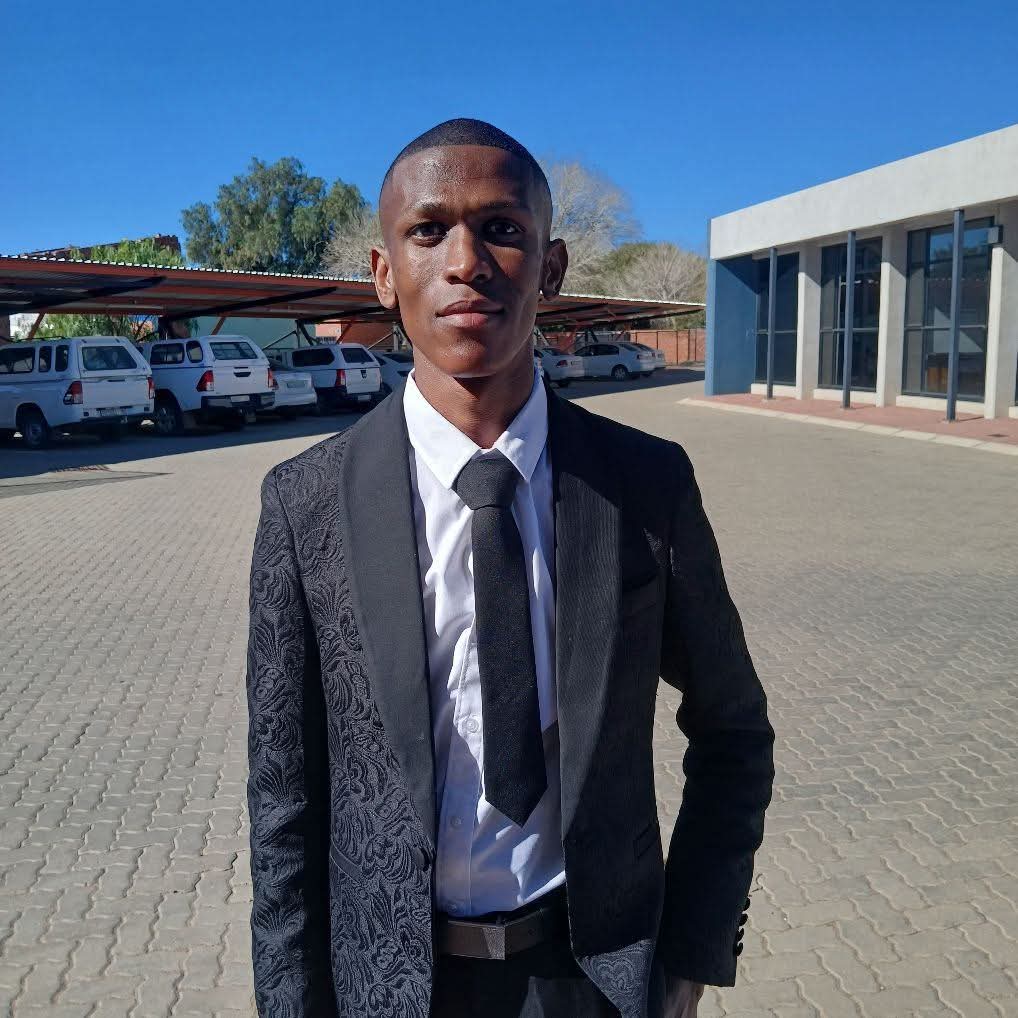
The Price of Freedom by Mosimanegape Leeuw
At a time when African literature is too often asked to explain itself, The Price of Freedom by Mosimanegape Leeuw refuses to translate. It insists.
Mosimanegape Leeuw is one of six gifted authors whose books were published through PUBLISH’D AFRIKA’s Adopt-An-Author Program for 2025/26. The program was funded by the National Arts Council, an agency of the Department of Sport, Arts and Culture.
Mosimanegape’s debut novel does not ask for permission to speak about broken systems, buried histories, and the cost of daring to hope. It demands that we sit in the ash and watch a young man decide what he is willing to lose so that others might breathe.
The Author: A Voice Forged Between Poetry, Law, and the Streets of the Northern Cape
To understand the novel, you must understand Mosimanegape Leeuw. He is not a writer who arrived at social themes through research. He arrived through living. Born in the Northern Cape and rooted in Kimberley’s “scarred landscapes,” Leeuw carries the perspective of a poet, a youth advocate, and an aspiring legal professional. He has already published three poetry collections — Thoughts and Tears, Behind the Dark, and From Darkness to Light—and a motivational work, It Takes a Village to Raise a Child. That lineage matters. Poetry taught him compression. Youth advocacy taught him urgency. Law taught him structure. His work consistently explores mental health, personal struggle, resilience, hope, and healing. These are not abstract themes for Leeuw. As a member of the Youth Advisory Panel for The Girl Effect, he spends his days amplifying young voices, advocating against gender-based violence, HIV stigma, and the neglect of vulnerable children. He speaks publicly, writes relentlessly, and organises locally. His vision is national and international: justice, equality, opportunity for young people.
“The Price of Freedom is the natural evolution of that life,” says PUBLISH’D AFRIKA Director, Thokozani Magagula. “The novel takes the lyric intensity of his poetry and channels it into narrative. It takes the legal mind he is training and applies it to questions of justice beyond the courtroom. It takes the youth advocate and gives him a protagonist who embodies every teenager told to ‘wait’ for freedom.” When Leeuw writes through Sma, he is not imagining a character from a distance. He is writing the questions he hears daily from young South Africans: If the system won’t change, who will? If I rise, what will it cost me? That convergence of lived advocacy and literary craft is rare. Many novels talk about revolution. Few are written by authors who spend their week fighting for mental health awareness and their nights drafting scenes about sacrifice. That authenticity gives the book its moral weight.
The Work: Freedom Redefined as Sacrifice, Not Slogan
The novel introduces us to Sma, a young man hardened by poverty and betrayal, who stands between the ashes of a broken nation and the dawn of a new beginning. The setting is Kimberley, but the landscape could be any post-colonial city where promises outpace progress. What makes Sma unforgettable is that Leeuw refuses the myth of the flawless hero. Sma does not rise because he is chosen. He rises because silence becomes unbearable. He carries a flag, but more importantly he carries the burden of an entire generation’s dreams. Leeuw’s central thesis is deceptively simple and brutally honest: freedom is not born in speeches or promises, but in sacrifice. Every step Sma takes toward justice costs him a piece of himself—love, friendship, and peace slowly fading into the smoke of revolution. “This is where the novel becomes thought-provoking,” says Magagula. “Most narratives about resistance celebrate victory. Leeuw interrogates the invoice. What happens to the self when the cause demands everything? Can a man free his people if he loses the capacity to live among them?” The question Leeuw poses—“how far would you go for the freedom of your people—and what would you lose along the way?”—is not rhetorical. It is ethical. It forces readers, especially young readers, to move beyond performative activism and confront the private grief that public change requires. In a literary climate saturated with dystopias and allegories, “The Price of Freedom” feels radical because it is grounded. The battles are fought in the streets and within the soul. The revolution is cinematic, yes, but it is also intimate. Leeuw paints with lyrical power and raw honesty the portrait of a man and a nation trying to reclaim its voice. The lyricism comes from his poetic training. The rawness comes from his refusal to sanitize struggle.
Literary Contribution: A Northern Cape Voice in the Canon of Resistance Literature
South African literature has a rich tradition of resistance writing, from Breytenbach to Mda to Mpe. But too often the narrative center remains urban, academic, and coastal. Leeuw writes from Kimberley, from the Northern Cape, from the interior spaces where history is felt as dust and drought as much as policy. That geographic specificity expands the canon. He gives readers a freedom fighter who is not from Johannesburg or Cape Town, but from a place scarred by both mining and marginalisation. In doing so, he reminds us that the fight for dignity is not metropolitan. It is national.
Stylistically, the novel bridges two worlds. The “lyrical power” honours Leeuw’s poet identity. Sentences breathe. Images linger. Yet the narrative drive honours his legal and advocacy training. Scenes move. Stakes escalate. This hybrid creates accessibility without sacrificing depth. Young readers who might not pick up dense political fiction will stay for Sma’s story. Readers who come for literature will stay for the moral complexity.
Thematically, the book connects directly to urgent contemporary conversations: mental health under political pressure, the psychological cost of activism, the tension between personal love and collective duty, and the way hope can tremble without breaking. Leeuw does not offer easy redemption. He offers redemption that is earned, and therefore believable. In a moment when young people are exhausted by empty inspiration, that honesty is a form of respect.
Why this Book, Why Now
Literary awards often ask: Does this work shift us? The Price of Freedom shifts us from slogans to sacrifice. It shifts us from celebrating heroes to understanding humans. It shifts us from coastal narratives to Northern Cape truths. It shifts us from asking “What is freedom?” to asking “What will freedom cost you, and are you willing to pay it?” Mosimanegape Leeuw has written a novel that is deeply moving, cinematically vivid, and ethically uncompromising. He has done it as a poet, an advocate, and a young leader committed to justice and equality. He has done it without losing hope, even when his character’s hope trembles.
For its moral courage, its lyrical craft, its expansion of South African literary geography, and its potential to spark dialogue among the very youth it portrays, The Price of Freedom is not just a story about a man who refuses to bow. It is a book that refuses to let us bow either—to apathy, to silence, or to the idea that freedom comes cheap.

