
How Sue Nyathi and Marcia Hutchinson Turned Rejection Into Revolution
Rejection letters don’t make headlines. They arrive quietly, fold into your desk drawer, and stack up like weights. But every once in a while, one “yes” arrives late, loud, and changes everything. Ask Sue Nyathi. Ask Marcia Hutchinson. Their stories aren’t just about books. They are about refusing to let “no” have the last word.
The Book That Wouldn’t Die
In 2012, a Zimbabwean writer named Sue Nyathi released a debut novel called The Polygamist. It was messy, bold, and unafraid. It followed Jonasi Gomora, a wealthy businessman played now by Sdumo Mtshali on screen, and his wife Joyce, played by Gugu Gumede, as they navigated power, infidelity, and the cost of it all. The book divided readers from page one. It was meant to. But the publishing world wasn’t ready. Bookstores turned it down. Distributors passed. Nyathi, watching doors close, made a decision most authors dread: she self-published. “My only wish was to write a book and then get help to produce and sell it,” she admitted on Instagram recently. She printed it, pushed it, and let it live on its own terms. Then she waited. For 13 years.
Hope has a way of thinning over a decade.
When a production company finally asked about turning The Polygamist into a drama series, Nyathi almost said no. She had lost hope, she confessed. Saying “yes” meant risking more rejection, more disappointment. But she took the chance anyway. That chance is now a 22-episode series on Netflix. Directed by Akin Omotoso and produced by Stained Glass Productions, it is being called one of the biggest local productions the company has made. Jonasi Gomora is back, this time on screens across the African continent and beyond, surrounded by a cast including Celeste Ntuli, Kwanele Mthethwa, Luyanda Zwane, Kenneth Nkosi, Wonder Ndlovu, and Noluthando Shabalala. The show sparked immediate debate. Social media lit up with comparisons between Jonasi and real-life powerful men. Viewers argued about masculinity, wealth, and what happens when power goes unchecked at work, in society, and inside the home. “My book, which I thought was small, has done wonders for me, and now I am known overseas,” Nyathi said. The girl who self-published because no one else would is now answering questions from readers halfway across the world.
54 Rejections, Then History
If Nyathi’s story proves that time can turn a “no” into a cultural moment, Marcia Hutchinson’s proves that persistence can rewrite literary history.
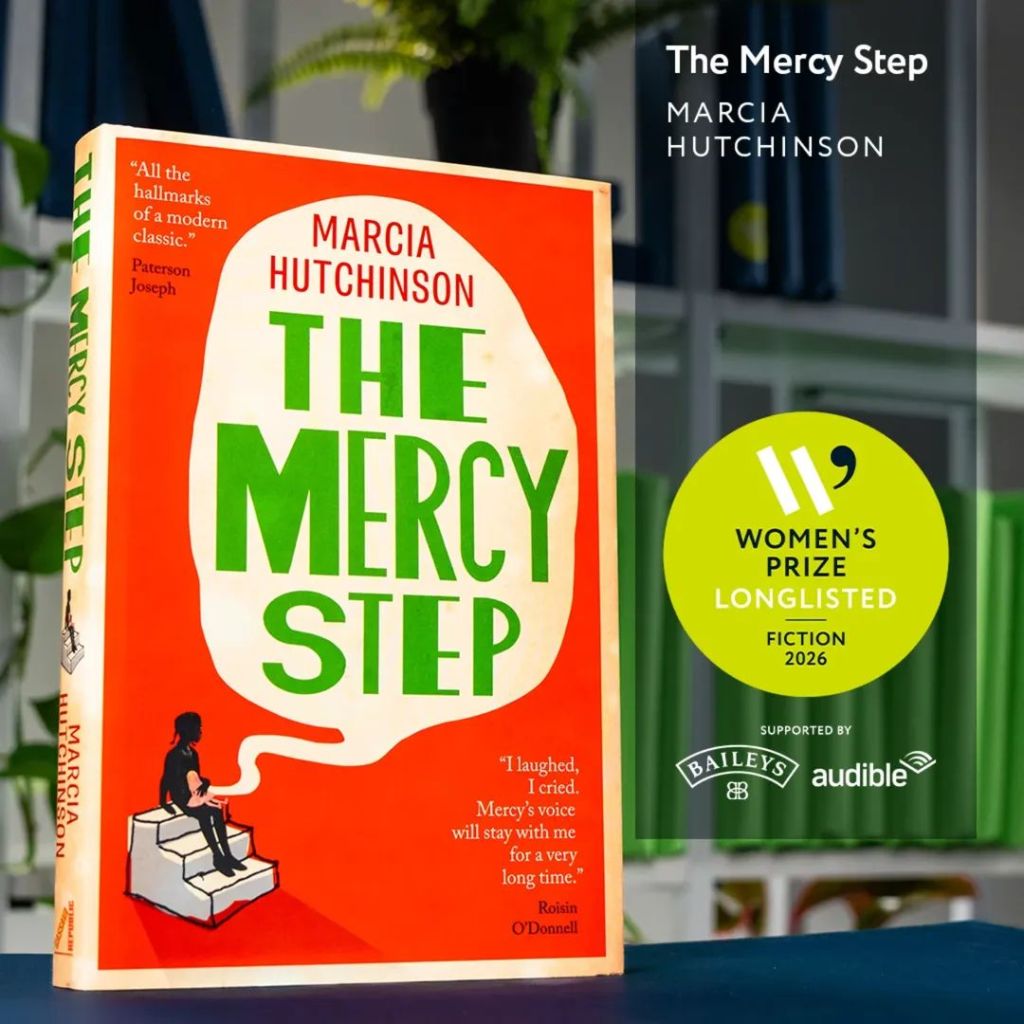
Hutchinson’s debut novel, The Mercy Step, follows Mercy, the youngest child of a Windrush-generation Jamaican family in 1960s Bradford. It is a story of cold mill towns, inadequate housing, a father’s violence, and a mother’s fierce love. It is also pungent with wit and colour, even when it refuses to look away from poverty and systemic abuse. Hutchinson wrote from her own difficult childhood. She became a full-time writer at sixty.
Before Cassava Republic Press said “yes”, fifty-four publishers said “no”. Fifty-four. Imagine opening that fifty-fourth rejection email at sixty years old, after a lifetime of waiting. Most people would stop. Hutchinson didn’t.Cassava Republic’s founder Bibi Bakare-Yusuf saw what others missed. “From the very first pages, I knew this was something extraordinary,” she said. “Mercy’s voice, so alive, so precise, so achingly real, is one that stays with you. The fact that fifty publishers passed on this novel only deepened my conviction that we had to publish it.” That conviction paid off. The Mercy Step won the Discover Prize at the 2026 British Book Awards. Hutchinson took the stage and quoted Coolio. The room was hers. Then the novel was shortlisted for the 2026 Women’s Prize for Fiction, placing Hutchinson’s debut among six novels selected from hundreds of submissions. Cassava Republic became the first Black-owned African independent publisher to reach the shortlist in the prize’s 30-year history. In their twentieth year, no less.
Even though the prize ultimately went to Virginia Evans’ The Correspondent, the impact was already made. “Being shortlisted placed Marcia Hutchinson’s debut among six outstanding novels,” Cassava Republic reflected. “It is a recognition that speaks to the power of the story.” More than that, it speaks to the power of refusing to quit.
Why “No” Isn’t The End
Look at both stories side by side and a pattern emerges. Rejection isn’t proof you are wrong. It is proof you are early. Nyathi’s book was rejected because it was uncomfortable. Hutchinson’s was rejected because it didn’t fit the mold. Both were too specific, too honest, too rooted in lives the mainstream hadn’t learned to see yet. Sue Nyathi thought her book was “small.” Fifty-four editors thought Hutchinson’s manuscript wasn’t commercial enough. Time proved them wrong. Netflix turned The Polygamist into a continental conversation starter. The Women’s Prize shortlist turned The Mercy Step into a landmark for Black-owned publishing. The stories didn’t change. The world did. Bibi Bakare-Yusuf put it best: “This is why independent, Black-owned publishing matters. Not as a corrective to the mainstream, but as a home. A place where a writer can debut at sixty. Where a story rooted in Black British life can be treated with the full literary ambition it deserves.”
Twenty years ago Cassava Republic started in Abuja with passion and a belief that African storytelling belonged to the world. Today, the world agrees.
The Quiet Rebellion of Continuing
There is a moment in every creative life when quitting makes perfect sense. The emails stop coming back. The sales stall. The doubt gets louder than the dream. That is the moment Nyathi and Hutchinson walked through.
Nyathi could have let The Polygamist sit on a shelf. Instead, she self-published, and let readers decide. Thirteen years later, that decision led to a Netflix deal and a series that has people arguing, relating, and rethinking. Hutchinson could have filed The Mercy Step away after rejection number twenty, or forty, or fifty-four. Instead, she kept going, and at sixty became a debut novelist whose voice now sits on bookshelves next to authors she once only dreamed of.
As Hutchinson said herself while long-listed for the Women’s Prize: “Just being on the same bookshelf as some of these amazing authors is a lifetime achievement in itself.” Lifetime achievement, earned after a lifetime of waiting.What We Owe the Next “No”The publishing industry loves overnight success stories. But overnight success is usually thirteen years of self-publishing. It is fifty-four rejection letters. It is writing through racism, cold weather, inadequate housing, and a father’s violence. It is believing in a story when no one else does yet. Cassava Republic’s journey with The Mercy Step reminds us what is at stake when we stop after rejection. “What matters most to us is that these stories are given the space to be read, engaged with, and considered on their own terms,” they wrote. That is what independent publishing does. It holds the door open until the world catches up.
Nyathi thanked Stained Glass Productions and director Akin Omotoso for aligning everything perfectly. Hutchinson thanked the community that gathered around her novel. Both women know the truth: success is never solo. But it also never starts without someone refusing to give up.
Your 55th Try
If you are reading this with your own stack of rejections, here is what Sue and Marcia are telling you: the rejection isn’t the verdict. It is the data. Fifty-four people didn’t see it. The fifty-fifth did. Bookstores didn’t want it. Netflix did. The world doesn’t need more stories that fit easily. It needs the ones that make us uncomfortable, that start conversations, that make a sixty-year-old debut feel like a revolution. It needs The Polygamist and The Mercy Step. It needs whatever you are holding back because someone told you it was “too much” or “not now.”
Rejection is loud in the moment. But “yes” echoes longer. Nyathi’s book, once considered too small, is now one of the top shows on Netflix Africa. Hutchinson’s novel, once passed over fifty-four times, is now shortlisted for one of the most prestigious literary prizes on earth. The difference between them and the manuscripts that never get made? They didn’t stop at the last “no.” So write the next chapter. Send the next submission. Take the chance you are scared to take. Your “yes” might be thirteen years away. It might be the fifty-fifth try. But if you quit at fifty-four, you will never know.
The world is still catching up to stories like these. Don’t stop before it does.

