Adverbs and Dialogue Tags

 .     The Do’s and Don’ts

The general rule in fiction writing is to eliminate as many adverbs as possible, and replace them with stronger, more specific words. Writing coaches all over the world are in agreement that using adverbs in dialogue tags qualifies as lazy writing often notable from novice, inexperienced authors. Adverbs in dialogue tags tend to tell the reader how he should think or feel, instead of the author making an effort to allow the character’s words and actions to paint the picture or evoke emotion in the reader.
What are adverbs and can you use them in your writing? Do you often feel you have to pepper your writing with adverbs to make your character’s demeanour clear, just in case you couldn’t quite crack it in the dialogue?
Adverbs are those words ending in ‘–ly’, often used to modify the verb – “he said angrily” or “he said hastily” or “she said gently”. When you describe how a character says or does something, you take away the power from their spoken words, as their emotions and body language become insignificant to the reader. Good writing, however, does not need adverbs to help your readers understand how your characters think or feel. Your dialogue should be strong enough to convey that emotion by itself.

Here’s an example:
“Get out of my house!” he said angrily.
“Get out of my house!” he said through gritted teeth.
The first example uses an adverb to communicate the feeling/emotion, basically telling the reader what he should feel, while the second uses an action. It is also ‘telling’ instead of ‘showing’. The second example tells the reader that the character is angry, without the writer stating it in the dialogue tag. The action itself (through gritted teeth) is brief; it eliminates the adverb and conveys the character’s emotion. This type of writing also helps to mold memorably vivid characters with distinct voices.
The function of dialogue tags is to tell us when a character is speaking, which character is speaking, and also helps to break long, winding dialogue. Some readers do not even notice dialogue tags; they simply read over them. A good writer would use a dialogue tag to insert body language, an action or a reaction, and this is not something a reader can easily miss. Without the reader being the wiser, you have conveyed the emotion and tone of the dialogue to the reader.
It is not an entirely bad idea to use adverbs. When you feel you have to, then use them sparingly, as long as they do not interrupt the flow in the story. This can be in instances where an adverb can easily replace a long sentence that is pregnant with character actions and body language. While some readers may not be irked by the use of adverbs, refrain from overusing them because you are not writing for just one reader – a host of other readers might pick up your book. Strike a balance that would accommodate a wide variety of readers and tastes.
There are, however, instances when an adverb cannot be avoided, such as when you find yourself writing dialogue for a character that is being sarcastic or polite. Picture a barman declining payment from a lady that he has taken a liking for at the bar.
“Nah, your money is not good enough here,” he said politely.
To some readers, the above dialogue might not be clear; the reader might think the barman suspects the lady’s money might be fake. A reader who gets it, though, would not be irked by the adverb, even though he realises that the barman is being polite. The reader might be so amused by the dialogue, he wouldn’t even notice the adverb.
Picture the same barman, now emboldened to shoot his shot, but the lady isn’t as charmed by his advances.
“So, how about I take you out tomorrow might?” he asked.
“Ask me again in ten years, I might say yes,” she said nonchalantly.
Again, a savvy reader would know immediately that the lady is in fact being sarcastically indifferent, but for a reader that isn’t as savvy, the adverb ‘nonchalantly’ has replaced writing a long-winded action that describes her aversion to the barman’s advances.
Writing coaches also advise against the use of synonyms for ‘said’, such as ‘he urged’, ‘he opined’, ‘he quizzed’ or ‘he lamented’. Again, when you have to use them, do so sparingly instead of littering them generously on every page. Make a habit of sticking to ‘said’ and ‘asked’ and steer clear of adverbial overuse.


CORPORATE INFORMATION
PUBLISH’D AFRIKA is a registered B-BBEE Level-1 company
Contact us for all your editing, proofreading and self-publishing needs.
Email: info@publishdafrika.com
Call/WhatsApp: +2783 487 4440 / +2774 643 0618
http://www.publishdafrika.com

Are You An African Writer, Or A Writer of African Descent?

Afreada: https://afreada.com/Adda Stories: https://www.addastories.org/Africa In Dialogue: https://africaindialogue.com/Africa In Words: https://africainwords.com/Africa Writes: https://africawrites.org/African Writer: https://www.africanwriter.com/Afritondo: https://www.afritondo.com/AfroSF: https://afrosf.submittable.com/submitAgbowo Art: https://agbowo.org/Ake Review: https://www.akefestival.org/about-ake-review/Akuko Magazine: https://www.akukomagazine.com/A Long House: https://alonghouse.com/The Amistad: https://www.theamistad.com/Anathema: http://www.anathemamag.com/ArabLit Quarterly: https://arablit.org/Artmosterrifric: https://artmosterrific.com/Azure: https://www.lazuliliterarygroup.com/azure-a-journal-of-literary-thought.htmlBakwa Magazine: https://bakwamagazine.com/Barzakh Magazine: https://www.barzakhmag.net/Best Of Africa: https://thebestofafrica.org/BKO Magazine: https://bkomagazine.co.za/Brainwavez: https://www.brainwavez.org/Brittle Paper: https://brittlepaper.com/Caine Prize for African Writing: https://www.caineprize.com/Chimurenga: https://chimurengachronic.co.za/Eclectica Mag: http://www.eclectica.org/index.htmlEro Gospel: https://erogospel.com/Everyday Journal: everydaysubmissions@gmail.comFIYAH: https://www.fiyahlitmag.com/Fortunate Traveller: https://www.fortunatetraveller.com/submissions/Guernica: https://www.guernicamag.com/Gutter: https://www.guttermag.co.uk/Imbiza Journal: https://www.imbizajournal.co.za/Ilunafriq: https://ilunafriq.com/Isele Magazine: https://iselemagazine.com/Iskanchi: https://iskanchi.com/submitJALA: https://africanlit.org/ala-publications/jala/Jalada Africa: https://jaladaafrica.org/James Currey Prize for African Literature: https://jamescurreyprize.com/James Murua’s Literary Blog: https://www.jamesmurua.com/The Johannesburg Review of Books: https://johannesburgreviewofbooks.com/The Journal of African Youth Literature: https://africanyouthliterature.art.blog/Ka’eda Africa: https://kaediafrica.org.ng/Kalahari Review: https://kalaharireview.com/Kendeka Prize for African Literature: https://www.solanopublications.com/kendeka-prize/Kikwetu Journal: http://www.kikwetujournal.com/Kweli Journal: http://www.kwelijournal.org/Libretto: https://librettong.com/Literandra: http://literandra.com/Literatas: http://www.literatasmz.org/Litro: https://www.litro.co.uk/Lolwe: https://lolwe.org/Lunaris Review: https://review.lunaris.com.ng/Lunar Station Quarterly: http://lunastationquarterly.com/Meskot: http://www.meskot.com/Minority Africa: https://minorityafrica.org/Mosaic Literary Magazine: https://mosaicmagazine.org/Nalubaale Review: https://nalubaalereview.wordpress.com/New Contrast: http://www.newcontrast.net/New Ink Review: https://thenir.wordpress.com/Olongo Africa: https://olongoafrica.com/Omenana: https://omenana.comPlantin: https://plantinmag.com/Periferias: https://revistaperiferias.org/en/Poda-Poda: https://poda-poda.com/Praxis Mgazine: http://www.praxismagonline.com/Pree: https://preelit.com/A Reader’s Community: PodcastRevista Literatas: http://www.literatasmz.org/Sable Literary Magazine: http://www.sablelitmag.org/SAND Journal: https://sandjournal.com/Silver Pinion: https://www.silverpinion.org/The Single Story Foundation: https://singlestory.org/Short Story Day Africa: http://shortstorydayafrica.org/Strange Horizons: http://strangehorizons.com/SUNU Journal: https://www.sunujournal.com/Sultan’s Seal: https://sultansseal.com/The Single Story Foundation: https://singlestory.org/Transition Magazine: https://hutchinscenter.fas.harvard.edu/transitionUncanny Magazine: https://uncannymagazine.com/Wasafiri: https://www.wasafiri.org/Wawa Book Review: https://wawabookreview.com/

Excerpt: Scorched Earth


Novel inspired by the 1899 – 1905 Anglo-Boer War


‘Do you know what upsets me the most about the Boers in this war, Mr. Steyn?’ he asked, and didn’t wait for a response. ‘You have the Germans, the Irish, the French, the Russians and the Swiss fighting on your side. Not only are you treating them better than you treat the Bantu, but you have promised them some of our lands and minerals as rewards for aiding you.’


He had been running for a better part of the day, now and then glancing over his shoulders to see if his pursuers were gaining on him. He hadn’t seen them for over an hour. Maybe they had given up and returned to camp.
No, the stubborn British never gave up that easily, especially on a lone, unarmed Boer soldier. He stopped to take a breath, his eyes still scanning the wet, sprawling landscape. Then he heard it, the unmistakable gait of heavy hooves. Two horses appeared in the distance, the riders whipping the beasts into a frenzied, speedy gallop.
Steyn took a mouthful of breath, and set off in a sprint. He ran, but he had no hope of escaping. The grassy, muddied open kloof ahead offered no cover or shelter. He couldn’t hope to stand his ground and put up a fight. In his mind’s eye, he already saw the horses’ wide nostrils bearing down on him, and the great hooves raining the fatal blows on his body. In his untimely demise, the soldiers didn’t even have to fire a shot.
He decided the wise thing to do was to give himself up and hope he won’t be summarily and unceremoniously executed. He sank to his knees, and placed his hands behind his head. He felt the booted foot kicking the back of his neck. He fell facelong into the mud. The soldiers merely wheeled their mounts around him, the giant hooves threatening to squash his legs and hands as he lay in the mud. It seemed the soldiers wanted him alive.
‘How far did you think you were going to run?’ one soldier asked, as he kept reining his restless horse in. ‘We annexed this entire rotten land. There’s a patrol for every ten kilometres.’
‘Were you hoping to be shot dead?’ the other soldier with a lieutenant’s stripes asked. ‘The war is almost over and you want to be shot dead. You are hoping to be a martyr, aren’t you? You want to be Cornelius Broeksma? A dead hero.’
The British soldier was referring to Broeksma, who was executed by an English firing squad in the Witwatersrand, on 30 September 1901. He was convicted of violating the neutrality oath and inciting others to do so. He had spoken out about the deplorable conditions of Boer women’s camps during the war. His picture, along with that of his family, was put on a post card in Holland, celebrating him as a martyr.
‘Perhaps we should make his dreams come true, Lieutenant,’ said the other soldier.

Steyn was dragged away to a makeshift British camp, just as an embarrassed soldier ran past dressed only in his underwear. He later heard that the soldier was one of many who had been caught by the Boer commandos. But instead of being summarily executed or detained, the Boers simply stripped them of their uniforms, their boots, horses and weapons and then chased them away. The British soldier’s story gave Steyn hope that the khakis will return the favour and release him in his undies.
He was mistaken. For three days in a row he was marched out to the bush for what he thought would be his encounter with the firing squad, but for some reason they never got round to killing him. They simply sat under the shade and chatted, commenting about the din of gunfire in the distance, smoked and then led him back to camp.
It was on the fourth day that he knew his luck had run out. He woke up to a camp bustling with activity, as the soldiers packed away their supplies and mounted their horses. They were abandoning the camp.
Two soldiers came riding in his direction, while their comrades rode out of the camp. He was certain the pair were his executioners. They were going to kill him, and then reunite with their comrades thereafter. The two soldiers, barely a day over eighteen, joked nervously, in a bid to build up the courage to shoot a man at point blank range. They had clearly never done it before.
Their jestering was abruptly interrupted by a flash of fire, as bullets ripped the ground near the horses’ hooves and whistling past their heads. The horses, startled by the gunfire, raised their hooves into the air, tumbling the riders into the muddied ground. The beasts galloped into the distance.
Steyn saw the two soldiers raising their rifles, and then their uniforms perforating at innumerable places, as bullets ripped into them. They dropped next to him shuddering, wide-eyed, their lives ebbing slowly away.
Steyn stared, startled at the source of the gunfire. It was a group of twelve armed black men who rose from the grass, just ten metres away. He was shocked at their appearance – some of them were dressed partially in British military uniforms and carrying British army issue rifles, the bolt action Lee-Metford and the breech loading Martin-Henry. He knew the weapons from disarming many British soldiers, both captured and killed. It was the tufts of grass on their heads that helped to camouflage their presence as they lay hidden in the grass.
‘Stand up!’ came the order from their leader, a tall, dark man dressed in muddied overalls that had to shed their sleeves to expose the man’s bulged, muscular arms. ‘Are you injured?’
‘No, thank God,’ Steyn replied.
‘Shouldn’t you be thanking us?’ asked the man, amused. ‘We are the ones who saved you. Your God had nothing to do with it.’
‘No, I meant…’
‘Relax, I know what you meant,’ he said. ‘A figure of speech. Yes, I know what you are thinking. An educated Bantu. We have the missionaries to thank for that, don’t we? My name is Mathew Ramatekoa. You might have heard about us. We are the Bantu Resistance Movement.’
Steyn had heard of the Bantu grouping with no allegiance to either side of the war. It failed dismally, leading to its leaders and a handful loyalists going into hiding. They had tried to mount defences of their own villages from being overrun by either the Boers or the British. But as the war raged on, their villages grew increasingly attractive and strategic for both fronts. Their locations, most of them alongside rivers and streams, were perfect for military outposts and for their ready supply of Bantu labour.
The stories of Bantu groupings resisting the European advances spread quickly, and gained favour with some villages. They found themselves being active participants in the war which they earlier tried to stay on the sidelines of. But thousands others enlisted for the war on either sides. Most of them soon found that they wouldn’t even be allowed to shoot a gun. They became agterryers; they were good enough to tend to camp chores, drive wagons and look after horses.
The Resistance effort was bound to fail, thanks to a cleverly crafted ploy by the Native Refuge Department to reward the families of those black men who accepted employment in the British army. They could buy mielies at half pence per pound, while those who continued to resist enlisting paid double.
Leaders like Mathew found themselves exiled for fear of arrest and the certainty of facing the firing squads. They scoured the land, launching guerrilla warfare on mostly British outposts, supply trains, wagons and roving patrols. The guerrillas dwindled even further after the Native Affairs permitted the recruitment of Blacks, for the re-opening of goldmines that had been closed down because of the war. Most men were recruited from the concentration camps, which meant Matthew’s men had to volunteer or be captured. During interrogation, some broke. That’s how Mathew became the most wanted man of his time.
‘I am Lloyd Steyn,’ he said, wondering if he should extend his hand for a handshake. Mathew hadn’t offered.
Steyn turned to look at the men, some who were already disarming the dead soldiers. The uniforms wouldn’t do; they were heavily bullet-riddled. He was stunned into silence.
‘Thank you,’ Steyn finally regained his ability of speech. ‘Unless of course, you are still planning to kill me.’
‘Mr. Steyn, our war may be against all foreigners who believe they have more rights than us on the land of our birth, but we would never pull the trigger on an unarmed man,’ said Mathew. ‘That’s the only reason these two are dead, and you are alive. The dueling field wasn’t even. You were outnumbered and outgunned. As long as this war continues, we will meet again, Mr. Steyn. Maybe then, we will exchange gunfire. But on this day, we will share a meal.’
Mathew and his men set up camp in the walls of a demolished farmhouse that Steyn and his men had passed just a week earlier. The silent military precision with which the men operated, from the smokeless camp fire, their seamless blending with the landscape and guard-posting, told Steyn that they had received expert military training. He wondered if the resistance had been tailing him and his men all along.
‘You are wondering whose side we are on in this war, aren’t you?’ Mathew asked, chewing noisily as he and a few of his men dug ravenously from the same bowl of meat and porridge. ‘There was a time when the answer would have been neither. But that meant we would have both warring parties gunning for us. We had to choose a side, the lesser of two evils.’
‘There already have been Blacks fighting on both sides of the war,’ Steyn pointed out. ‘You might say, evil had already been in the eye of the beholder, then?’
Mathew smirked.
‘Another figure of speech, albeit your own,’ he said. ‘Indeed, our people made their choices, uninformed and coerced choices. It would not have hurt to wait. It would not have hurt to use hindsight. Boers and the British have never seen the Bantu as an equal, and they are not going to anytime soon. There’s already talk for peace, an end to the war. Who is representing Bantu interests? We haven’t even been invited to the table, because this wasn’t our war in the first place.’
‘Yet you are still fighting,’ Steyn said. ‘Whose side are you on?’
‘From the beginning of this war, we were the ones who had to pick a side, but were the conditions conducive for us to make an informed, objective choice?’ he asked. ‘We are talking about men whose lives were interrupted, who because of your war, had to leave their jobs in the Witwatersrand, the Free State and the Transvaal, and return to villages ravaged by poverty. They were not in a position to make an objective decision which side to pick in this war. They simply took what was on offer. Yet you, the warring parties, still agreed amongst yourselves that we shouldn’t be armed. You felt our methods in war were brutal, you felt we cannot be trusted with guns. A black man with a gun might not be easy to govern after the war, you said. So we were still not good enough for both sides, Mr. Steyn.’
‘Yet here you are,’ Steyn said, and accepted another piece of meat from the bowl the men kept passing around as they feasted.
‘We are the other side, the side both the Boer and British feared might be born out of this war, the independent-thinking Bantu,’ he said. ‘Not your agterryers. We have thought of fighting with you, Mr. Steyn. Your people have shown a willingness to make the land your home, to start afresh. Not to make it yet another colonised outpost of Her Majesty the Queen. But it is up to you how long you want our rifles pointing the other way.’
‘But we have almost already lost the war,’ said Steyn. ‘The British have nearly won this war.’
‘Our struggle is just beginning,’ Mathew said. ‘The British might have won, and for you it is over. But not for us. You will have to remember, Mr. Steyn. Both you and the British have been fighting for land that belonged to neither of you. We are the undeniable, lawful owners of the land. But we are the ones who now have to live in hiding. We cannot go back to our homes. There would be no trial. Only the gallows await Bantu who kill mlungu. Even the Boers agree.’
‘I don’t agree,’ said Steyn as a matter of fact.
‘Only because it was the Bantu who saved your life from your sworn enemy,’ Mathew said, standing up and wiping his hands on his overalls. ‘Had your enemy killed you, it would have been accepted that you were a casualty of this war. Had I killed you, it would have been murder. You recognise that this isn’t a blackman’s war only when it suits you. You are not the only Boer we have saved, Mr. Steyn. We have opened fire on many other mlungus to save lives. Black lives. But for that we face the gallows. You know why? Because black lives don’t matter. Not to the British, and not to the Boers.’
Mathew drew a deep breath, and stared at Steyn intently.
‘Do you know what upsets me the most about the Boers in this war, Mr. Steyn?’ he asked, and didn’t wait for a response. ‘You have the Germans, the Irish, the French, the Russians and the Swiss fighting on your side. Not only are you treating them better than us, but you have promised them some of our lands and minerals as rewards for aiding you. I am going to go and get some sleep. I suggest you do the same.’
One of Mathew’s men, who had been placed on guard duty, gave Steyn his rollbed. For the first time in many months, Steyn actually fell asleep. He opened one eye just after midnight, and saw the men quietly alternating guard duty. Then he drowsed into a sound, peaceful slumber.


Read the novel for free if you are already subscribed to Kindle Unlimited. For hard copies, WhatsApp +2783 487 4440 to place your order, or purchase on Amazon on the link below:
https://a.co/d/1ed0MKQ

FAQ’s Authors Often Ask Self-publishers

The Good, The Bad, The Ugly, The Silly, The Hilarious and The Downright Bizarre

FYI: This Is A Loooong Read!!! This is a dramatisation with answers provided by an honest publisher (Publisher Y), and a not-so-honest publisher (Publisher X). Of course, in some quarters both publishers would be labelled as dishonest. Everyone is entitled to their opinions.


Author: I got your contact details from a self-publishers’ group on Facebook. I have a book that I would like to publish. What services do you offer and what are your costs?
Publisher: We offer editing and proofreading, manuscript development where needed, cover design, layout and typesetting, ISBN application and we also print on demand. Our costs are varied depending on the package you are interested in. We have the following packages…
and the costs are as follows….


Author: I think you are a scammer. Why didn’t you ask me about the book itself? You just went for the money. What if my book isn’t worth the paper it is printed on? Are you going to publish it anyway simply because I am paying?
Publisher: I answered what you asked. Let’s recap: You asked about the services that we offer and the costs. That is what I responded on – the questions you asked. Manuscript development means should there be a need to help you develop certain chapters, or overhaul them completely, we can help you with that. Please note, this does not mean we will rewrite the book for you. If it is truly badly written, then we will tell you to go back to the drawing board. We can only rescue what can be rescued. Having said that, if you are not confident in your own work, then you most probably are not ready to publish.


Author: I have every confidence in my work. It is you I am not so sure about.
Publisher: Yet here you are, talking to me. I would suggest that you keep searching then. Never, ever work with a publisher you are not certain about.


Author: I think your costs are exorbitant. I actually got a better offer from Publisher X. They said they will also help me to sell internationally.
Publisher: Yet here you are, talking to me. If you feel Publisher X is best suited for your work, then by all means, get started with them. Do not put one publisher in a position to badmouth another. Do compare rates, ask for sample edits and speak to authors who have worked with them in the past. Your decision to publish shouldn’t solely be based on the cost and promises that seem unrealistic, but also on workmanship, skill, experience, track record and what you envisage for your book in general.
Every author has aspirations of breaking into the international market, but if a self-publisher promises you that kind of success off the bat, I would be suspicious. Most South African authors who have gotten a taste of the international market, have first obtained success at home, with books initially published for the domestic market. Amazon and Draft2Digital, amongst others, have made it easier for authors to reach the world, but just because the book is online does not mean it will now become a bestseller. There are millions of books on Amazon alone. What are you doing to make yours stand out? Curb your enthusiasm and be realistic, otherwise you are setting yourself up for failure and heartbreak post publishing.


Author: I don’t need an editor, I edit my own work.
Publisher Y: Actually, it’s supposed to be ‘I don’t need an editor; I edit my own work’. A semi-colon, not a comma, is appropriate in this sentence because the two lines are closely related to each other. Or you can simply use a full stop. Shorter sentences have more impact. Even the best writers in the world have editors. Let another pair of eyes go through your work, and you will be surprised by what they find that you might have missed. Better yet, get a Beta Reader. They don’t charge you to look at your work. But whatever you do, get your work edited.
Publisher X: That’s not a problem. We will then simply lower the cost, and charge you for only the services we will provide minus editing.


*NB – An honest publisher will not allow a book that hasn’t been professionally done carry their stamp of approval. One that does is a red flag. If it carries their name – and even when it doesn’t – they should do due diligence. How many times have you been asked, “So who did you publish with?” The question is asked for one of two reasons – the book is badly written, or it is done just right. Your publisher should put as much an effort into your work as you do. He or she shouldn’t just copy and paste and then print.


Author: I don’t think you should be charging people to publish. Self-publishers cannot be trusted. Traditional publishing is the way to go.
Publisher: You said you got my details from a self-publishers’ group. What are you doing in a self-publishers’ group when all you are interested in is traditional publishing?
Author: The way you speak to me is rude and unprofessional. I think I am right about you, you are all about the money. You are a scammer.
Publisher: Your last sentence shows you still need to learn where to use a comma and where to use a semi-colon. Regardless, I think I have been professional and accommodating with you, much more than I should have. I have answered your questions as candidly and as professionally as I could despite the sheer provocation you keep dishing out. Honestly, I should have ended this conversation a long time ago. If there is one thing I will not do though, is to allow you to determine what is professional and what is not. By merely asking me about a service you know you don’t require and are not even remotely interested in, is a waste of my time. You were unprofessional from the word go. You are therefore not in a position to determine what is professional and what is not.
Please visit the Publishers Association of South Africa for a list of reputable traditional publishers. Study each one, especially their submission guidelines, and pick those that you feel are more likely to publish your work. Some rarely accept unsolicited manuscripts, while others have submission windows. Good luck.


Author: Let’s say I publish with you. Do you think my book will sell?
Publisher X: Yes, I think you have a gem here. This book will fly off the shelves. It will sell like hotcakes. This is what the country and the world has been waiting for. There is a big market for authors like you. You are certainly the next Steven King.
Publisher Y: I don’t know. Do you think your book will sell? Do you already have a well-defined market or target audience for your work? How big a following and fanbase have you grown and how many people out there are aware that you are about to publish a book? Have you marketed it or yourself as a brand? Are you an authority in your chosen subject matter? If you are, and there are people out there patiently waiting for you to drop this book, then most definitely, your book will sell, because you have done the groundwork.


Author: When, then, would you say a new author is ready to publish?
Publisher X: When your book is done, and you have put together enough money to publish. Just come to us and we will make your dream come true.
Publisher Y: You are ready to publish when you have satisfied yourself that you have done all that is humanly possible to market yourself and your book to your target audience. The best way to check if you have done enough groundwork, is to call for pre-orders. Anyone who wants to buy your book, will not hesitate to pre-order it. This cannot be overemphasised – LIKES ON FACEBOOK CAN NEVER TRANSLATE TO SALES. Do not order or print in bulk based on the people who liked your posts on Facebook and promised to buy as soon as the book is out. People on social media have a very short memory. Over a hundred people can like your post, but less than ten might actually follow up with a purchase. You might end up with hundreds of unsold books gathering dust in your garage.


Author: Can you get my book into bookstores?
Publisher X: Yes, of course. All our books go to bookstore X and Bookstore Y and Bookstore Z. Yours too will be on their shelves.
Publisher Y: We do everything in our power to get your book into bookstores, but we also need your help to do it. For starters, no bookstore will keep a book on their shelves if it is not generating traffic through their doors. If it gathers dust on the shelves, it will be removed to make space for books that actually sell. Bookstores are also a business and need to make a profit. It is therefore your responsibility to market your book to death, so that it brings traffic through the bookstores’ doors. As you may know, major bookstores are reluctant to work with little known self-published authors and prefer to work with distributors. This is another avenue you can consider. Exceptions, however, can be made for authors who show diligence in marketing themselves and whose books are in demand.
Either way, ensuring that the book remains on the shelves is your responsibility, not the self-publisher’s. You are, after all, an independently published author. Even if this is in the contract, do not expect a self-publisher to help you post publication because they rarely do.


Author: Can you get my book to be read at schools?
Publisher X: Of course. Many of our authors have had their books accepted by the Department of Education.
Publisher Y: Annually, various provinces in the country open submission windows for authors and publishers to submit their books for evaluation. It is however not all the provinces who do this and not every book is accepted. While your book may be accepted, there is a chance that the department might not order more than 100 copies. These are the stories authors don’t tell for fear of being laughing stocks. There are authors who have received orders for as little as two copies, while some who were approved have been told they would be considered the following year. The government just doesn’t have the money, so don’t get your hopes too high.


Author: What if you help me to publish and then get your money from the sales of the book?
Publisher X: Yes, we can certainly do that. I will simply hold on to the artwork and you will print through me. Basically, I will be selling you your work so that you can resell. I will also own the copyright of your work for at least three years. After all, no one knows your audience more than you, so you will do the selling until your debt is paid.
Publisher Y: Yes, we can certainly do that, if you can show me your marketing plan that will convince me that this arrangement will give me a return on my investment. You see, this arrangement works best with celebrities like Somizi and Khanyi Mbau, because they already have an established following and a fanbase. As an independently published author, I would not advise you to opt for this arrangement, because you will not fully own your work until your debt is fully paid. The publisher gets to decide when this debt is paid. You could enslave yourself until your book sales reach the ceiling, or until you can’t sell anymore. Some publishers can tie you up with contracts that require you to purchase a certain number of books from them monthly, even when you do not have readers who have ordered the books. And in the event that some bigshot producer is interested in adapting your book for the big screen or television, it is the self-publisher they would be negotiating with as they still own the rights to your work.


Author: Why should I choose to work with you instead of Publisher X?
Publisher: If you want to work with a publisher who will tell you what you want to hear, then by all means, pick Publisher X. I have no doubt Publisher X will do a splendid job with your book. The only problem I envisage, is when the other grand promises they have made do not materialise. You might find yourself dishing out dirty linen on them on these Facebook streets. I would suggest that you pick a publisher that resonates with you and ask them to be blatantly honest on what they can do and what they can’t. No unrealistic, over-the-top promises such as international bestseller.
Publishing a book is easy. Selling the same book is the hardest part. Often, this is where the author and publisher find themselves at loggerheads – because the author had expectations that the publisher has fed with promises and they became a famished, fire-breathing monster. Like a jilted lover, the author becomes bitter and demands that the promises be honoured or that he/she be refunded. Meanwhile, the publisher has moved on to another author and has no intention of refunding you. The end result might land you in court, defending a defamation lawsuit.

Do You Have A Road Accident Fund Story To Tell?

Have you been awaiting your Road Accident Fund compensation, and are wondering why it is taking so long to pay out? What if the money has been paid out and your lawyer keeps telling you RAF still hasn’t paid out just so he scores a good interest for himself? It is possible that your money was paid out a long time ago, but your lawyer has declared you incapable of handling your own affairs and appointed himself as your proxy.
In my 16-year career as a journalist, I have unearthed countless stories of corruption, fraud and plain thuggery by those put in positions of power and trust. The stories that have hurt me the most, however, have been those of the theft of Road Accident Fund benefits – theft not from the fund itself, but by lawyers stealing from those who are supposed to receive the money.
In Delmas, Mpumalanga, I unearthed a sodded tale of a man who lost his leg in a car accident. His life got so bad that he lived in the streets as a hobo, while waiting for his lawyer to inform him about the progress of his RAF claim. Unbeknownst to him, the lawyer had received the money, over R1 million, two years earlier, but had been telling his client that the RAF is yet to pay out. Now and then, the lawyer would give him loans of between R1000 and R2500, promising to deduct the money when his benefits are finally paid out.
In Secunda, another client who used the same lawyer had been awaiting his payout for over three years. What he didn’t know was that the money had in fact been paid out, and that the loans the lawyer had been giving him were from his own money. The man lived in abject poverty, plagued daily by the aches and pains from the hoffiric injuries he sustained in the car accident, unaware that he was already a multi-millionaire.
In Bronkhorstspruit, Groblersdal and Mashishing I dug up the tragic accounts of three vehicle accident victims who simply vanished on the eve of their RAF payouts. One of them was found a day after he vanished. He was dead and his body run over by countless cars on the N12. The last people known to have seen them were their lawyers.
In Springs, I was tipped off about a lawyer who receives the clients’ benefits, but does not immediately dispense the monies to the people who desperately need it. The clients need the money for, amongst many other pressing needs, their medical bills and necessities of life such as food, transportation and shelter. The legal eagle without clout opted to keep the money in his bank account for up to six months to a year, so it would accumulate interest that he wouldn’t dispense to the client. This is over and above his 25% of the payout that he is allowed by law to pocket for his services.
Of course, some lawyers cut themselves quite a bigger slice, bigger than the 25% they are allowed by law. After all, how would the client even know? Most clients are so excited at receiving the windfall, they don’t bother to do the Math or check exactly how much is due to them.
But how are these lawyers able to do this and get away with it? Simple: they set up a trust and their clients’ payouts are then paid into this trust. Next, they declare the client mentally incapable of handling his or her own affairs. The lawyers then appoint themselves as trustees, practically giving themselves proxy or signatory powers over the clients’ benefits. The Delmas homeless man for example, was at the lawyer’s mercy in that the lawyer built him a shack on an illegal piece of land near the N12, just to separate him from people who were trying to help him. Yes, he was a squatter camp millionaire. A man worth over R1million lived in a shack!
Whatever the rot or modus operandi employed, the fact is, these lawyers without clout are living lavish lives at your expense, and now it is time they are exposed and stopped. In the next three months, we intend to hold interviews with those people who have been through bizarre situations with lawyers who were supposed to help them but turned around and made a meal of them.

Who Do We Need To Hear From?

  1. We want to hear from people who received their RAF benefits but suspect they might have been short-changed by their lawyers.
  2. We want to hear from people who suspect their lawyers might have taken a bigger cut than they should have.
  3. We want to hear from people who, through their lawyers, have claimed from the RAF but suspect the lawyer might have received the funds and is witholding them from him/her.
  4. We need to hear from people whose lawyers are generous enough to give them loans but aren’t forthcoming about their RAF benefits.
  5. We need to hear from people who have lost loved ones who have been awaiting benefits from the Road Accident Fund.

What Would Be Expected Of You?

  1. While we investigate the matter and assist you, we will need you to consent to an interview on camera.
  2. Our investigation and assistance will be free of charge. Anyone who claims to represent us and asks you for money is not a member of our team.
  3. Sign a consent form / release for the video material to be broadcast on TV, newspapers, magazine and on online platforms.
  4. Provide us with all documentation that will assist us in our investigations.
  5. Acknowledge that our intervention might not have further financial benefits for you, but will assist in rooting out bad elements in the legal fraternity.
  6. Depending on the nature of your case, you might be expected to have further engagements with law enforcement agencies including the Law Society of South Africa.
    Do you have a story to tell? Then contact us on WhatsApp at 083 487 4440, or email info@publishdafrika.com.

Photo: Timothy Mkhabela’s lawyer received over R1 million in RAF benefits, but kept telling Timothy that his compensation still has not been paid out. To separate Timothy from people who might show him the light, the lawyer built him a shack near the N12.

Turn That On-the-Job Experience Into A Qualification

You have been doing the work for years and have amassed a wealth of experience, but have never had formal education for the job or obtained a qualification for it. Everything you know, has been obtained from On-the-Job Experience. This lack of formal education has curtailed your career advancement, forcing you to watch less experienced colleagues progress ahead of you simply because they have diplomas/degrees.
Well, not anymore. Your wealth experience can actually be all you need to get an internationally recognised qualification.
The University of South Africa (Unisa) uses the Recognition of Prior Learning (RPL) process as an additional pathway to admit students in its qualifications.
The RPL process is designed to provide students who do not meet the statutory admission requirements of the qualifications but have gained work experience. It acknowledges previous knowledge, skills, and competencies for them to have access, mobility, and better career paths. It permits our prospective students to gain credits within formal certificates, diplomas, and degree qualifications offered by the university based on the level and extent of their knowledge.
This process is also a commitment to being responsive and student-centered through providing a supportive and enabling environment for students with work experience and skills to study further through UNISA’s comprehensive open distance e-learning (CODeL) model and opportunities.
Whereas Unisa has been using the RPL process for many years, the community is unaware of this pathway. Unisa staff members are available to explain the benefits of the RPL process through the media.

For enquiries and interviews requests, please contact Tommy Huma (Unisa: Senior Media Officer) on 072 218 6197 / humartm@unisa.ac.za OR Edgar Rathelele on 063 731 5456 / ratheme@unisa.ac.za

$1000 (17 800) Up For Grabs In Short Story Contest

This is the 5th year of the Afritondo Short Story Prize and a special landmark for us at Afritondo. We thank all our writers for their contributions and look forward to reading all the stories for this year’s contest.

THEME
This year we want writers to respond to the theme of “fate”. You are welcome to give the theme your own personal interpretation.

As always we are looking for stories that surprise us, that take risks with imagination and language. A good story for our theme will offer unique insight into the theme and explore characters in refreshing and imaginative ways.

Deadline: December 15, 2023.

PRIZE
The winner will receive a cash prize of $1000. Four other shortlisted writers will get $100 each. The longlist will be published in an anthology in August 2024.

The 2023 Prize was awarded to Alex Kadiri for his story, The Hyena and The Two-Headed Goat, published in the anthology, The Anatomy of Flying Things.

The 2022 Prize was awarded to Howard Meh-Buh Maximus for his story, Grotto, published in the anthology Rain Dance.

The 2021 Prize was awarded to Desta Haile for her story, Ethio-Cubano, published in the anthology The Hope, The Prayer, The Anthem.

The 2020 Prize was awarded to Jarred Thompson for his story, Good Help is Hard to Find, published in the anthology Yellow Means Stay.

The entry guidelines for the 2024 Prize can be found here:

https://afritondo.com/entry-guidelines-2024

Women Breaking The Glass Ceiling

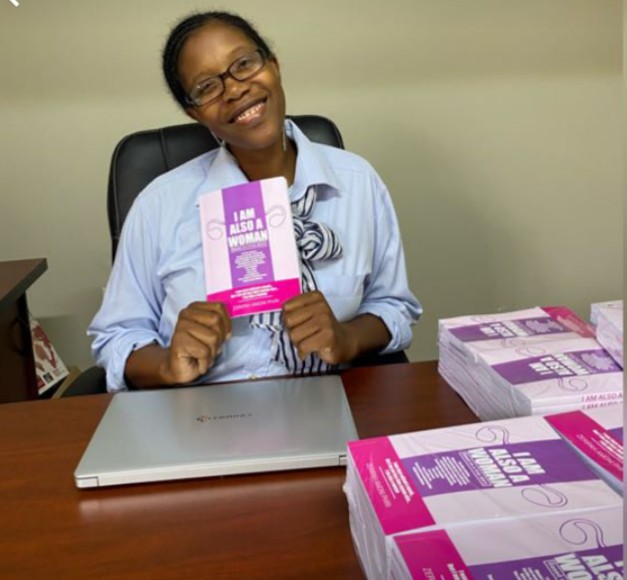
ISBN: 978-0-6397-4568-8

Women Breaking The Glass Ceiling
Glass Ceiling (noun): An unacknowledged barrier to advancement in a profession, especially affecting women and members of minorities. – Oxford Languages.
*A metaphor usually applied to people of marginalised genders, used to represent an invisible barrier that prevents an oppressed demographic from rising beyond a certain level in a hierarchy. No matter how invisible the glass ceiling is expressed, it is actually a difficult obstacle to overcome. – Wikipedia
*The invisible – but impenetrable – barrier(s) between women and the executive suite, preventing women from reaching the highest levels of the business world regardless of their accomplishments and merits. – The US Department of Labor.
The term ‘glass ceiling’ was first popularised in the late 1970s to describe invisible barriers to women’s career advancements. Though society has made giant strides towards levelling the playing field, the odds are still stacked against women who have the ambition and potential to lead.
In this book, 18 scholars dissect these unacknowledged rules and obstacles waylaying women in their paths of career advancement. Each chapter, backed by published studies conducted around the globe, probes these ‘speedhumps’ that are not in a form of well-defined policies, but still go a long way in preventing women from gaining leadership opportunities, leaving them at the bottom of the workplace hierarchies and appreciated merely as homemakers.
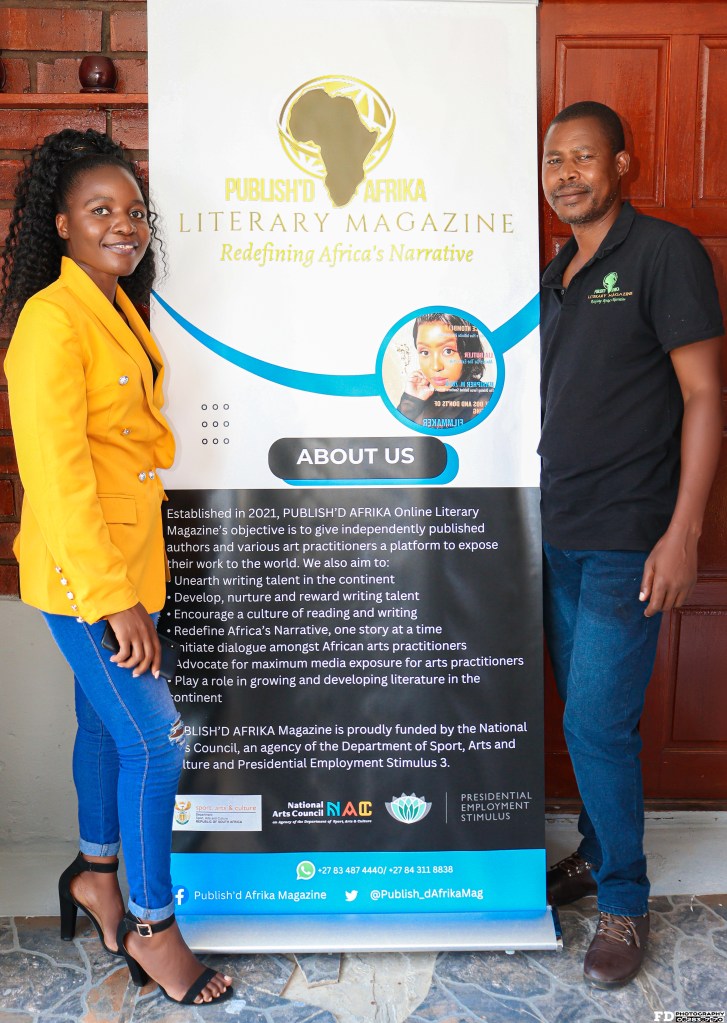
PUBLISH’D AFRIKA co-founder Thokozani Magagula said the book is a must for every woman with an ambition to climb the corporate ladder in business, government, construction, engineering and any other sphere known to be male-dominated.
“The authors look into the glass ceiling at institutions of higher learning, the business world, industries and in how the glass ceiling affects widows in the African cultural setting,” he said. “The book also covers colonial influence, White domination and power structures in academia, as well as gender and age biases in the workplace, culture and widows.”
Professor Maehabo Magano, a full professor in the Department of Psychology of Education at the University of South Africa (UNISA), said there are many critical issues regarding the lack of equity and parity for women of colour in the workplace. These include unequal representation, lack of sociocultural understanding, embedded institutional racism, and insufficient collaboration and relationship building.
“In many societies around the world, women also face greater societal scrutiny as well as unequal treatment in the workplace, at home and in relationships,” she said. “In this volume, titled Women Breaking the Glass Ceiling, we explore various ways in which women draw on their individual resourcefulness, traditional values, and support of female and male allies to navigate the ways and means of breaking the proverbial glass ceiling.”
Women experience a myriad of challenges in different spheres of life that may prevent them from achieving their full potential. According to Professor Dolapo Adeniji, of Adelphi University in the United States, most women work very hard to equip themselves academically and make sound contributions to their practice and broader community. Some of their contributions are even cited and implemented in various fields and disciplines to make a difference globally.
“Yet, despite their sound and valuable academic contributions, very few women ascend the academic ladder to reach managerial leadership at the apex of institutions of higher learning,” she said. “Those who manage to lead and be appointed to the middle and top-level management roles also face pressure from their counterparts and other structures in society. They also struggle to achieve their full potential in other sectors including society, tribal groups, politics and economy.”
“Thus, it is necessary to examine how women are perceived globally and how patriarchy has bedevilled the society. Will the world ever have a paradigm shift in recognising women? Are women pushing hard enough to break the glass ceiling that exists globally?”
The current body of work is an attempt to address these questions and to leverage on the experiences of women, especially those in higher education, to create a scholarship of possibility and a reality for women to break the glass ceiling and ascend the ladder of success in any discipline and lead.
To order the book, please email info@publishdafrika.com