PUBLISH’D AFRIKA CHRONICLES


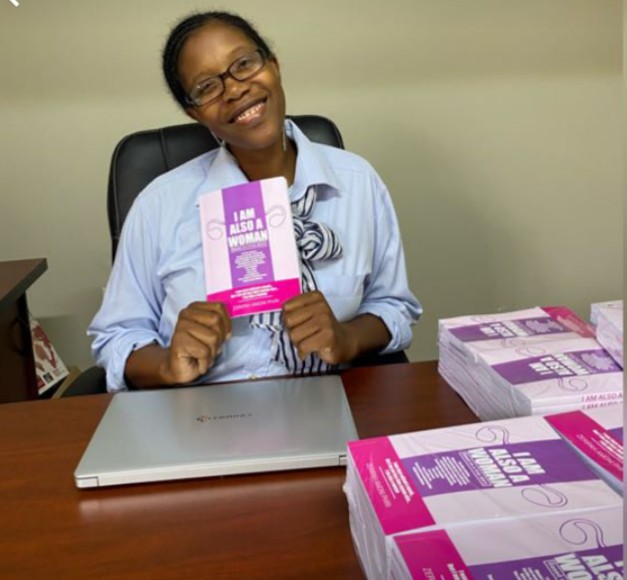
BOOK #1: I AM ALSO A WOMAN

By Zeripah Phiri
ISBN: 978-1-77626-078-2
Pages: 140
Publisher: PUBLISH’D AFRIKA


While her peers had already forgotten how many times they had gone through their monthly menstrual circles, Zeripah Phiri still hadn’t seen hers, and she was already 19 going on 20. But she didn’t think much of it. She believed she might have been a late bloomer. After all, she had always been skinny and petite growing up, and even her breasts hadn’t fully developed by the time she turned 18.
It wasn’t until she got married at 21, that the matter of her menstrual period became a sore point in her marriage. She also found that she and her husband couldn’t consummate their marriage – he just couldn’t penetrate her even after using the best lubricants money can buy. Doctors also couldn’t help, so they turned to prophets and traditional healers – with disastrous results.
“One sangoma accused my grandmother of having cast a spell on me and magically stole my womb,” says Zeripah, reminiscing. “Another instructed me to insert a coarse corn cob into my vagina three times a day, in combination with an assortment of concoctions, in a bid to widen my vaginal walls. You can imagine how painful that was.”
On the home front, the in-laws were understandably unhappy that their makoti still hadn’t conceived, two years into the marriage. Zeripah’s father-in-law went as far as to urge his son to take a second wife, as he couldn’t bear the thought of ‘a piece of furniture occupying space in my son’s house’. Needless to say, it wasn’t long before the husband started having a wandering eye, eventually starting a secret relationship with a woman who was known to the family.
‘I Am Also A Woman’ is a true-life story of Zeripah Phiri, who was born without a womb, a condition known as MRKH. It is a rare congenital disorder that affects the female reproductive system. It is characterised by an underdeveloped vagina and uterus. The uterus may be small or absent, and the vagina is typically shortened, hence her husband couldn’t penetrate her. The condition affects one in 5000 women worldwide.
“I was already married when I discovered I suffered from this condition,” says Zeripah. “It basically means I can’t conceive even if I wanted to, and that I had wasted thousands on zangoma, fake prophets, quacks and traditional healers, who all had convinced me that they could cure me. Funny enough, shortly after I published the book, I even got offers from men who vowed that their manhoods were divine and that they could give me a baby after just one night in bed with them.”
Most women with this – at least those who are in relationships and are aware that they suffer from MRKH – find themselves having to use vibrators not because they have the urge for sex, but because the vagina tends to close up if not penetrated for an extended period of time.
“Those who are married or in relationships, who have husbands or partners who work far from home, have to continuously ‘service’ themselves with vibrators,” says Zeripah. “If they don’t, intercourse with their partners will be a painful, horrendous experience on their return.”
Zeripah says she wrote the book to share her life story, to teach others her perspective and prove to herself that she is not alone. She believes there are others who will whisper, “Me too”. She has decided to come out of the proverbial closet, express and pour out her heart without interruption.
“I believe that by doing this, I will be able to reach out to a lot of people going through the same reality as mine; women who bore the brunt from the same syndrome but are not ready to open up,” she says. “I feel that opening up your wounds helps in healing.”
“In this book, I share my life story, what I went through until the day I took the bold decision to talk about my condition. I must say, this journey of infertility is so draining at times, but I have learnt not to let my crown fall.”

What Is An Editor?

By James McCreet


I’ve been professionally editing and subediting text for almost two decades. Not only fiction, but also magazine articles, academic theses and business writing. The traditional role of an editor has been to polish and correct work written by someone who is, essentially, already a proficient writer but who needs another pair of eyes on their work.

In this traditional model, the writer is usually at least as good a writer as the editor – and possibly better. The editor, however, has different knowledge: a deeper understanding of grammar, more experience of plot structures, a better sense of the market, a set of guidelines required by a particular publisher. The editor tweaks an already effective piece of work into the final product.

The relationship works because the skills are complementary. The editor is not typically a writer and the writer is not an editor (though either theoretically could be. It happens).

What I’m seeing these days is a change in the editor’s role. It seems that a writer now is someone who isn’t, essentially, a proficient writer but wants to be. Nevertheless, they have produced a book. The editor’s role in this model is not to add a final polish but to fix all of the errors: the defective dialogue, the bad description, the incoherent plot, the confused tenses, the fundamental lack of correct punctuation etc.

In short, the editor is not adding the final polish but adding the writing itself. The editor must also be the writer. The person who wrote the manuscript is neither a writer nor an editor.

It’s one way – a collaborative or collective way – to produce a novel, though it puts most of the skill on the editor. It’s a reason why I generally don’t edit novels anymore unless it’s the traditional model. Trying to edit a fundamentally badly-written novel is like trying to unbreak an egg. If someone fundamentally can’t write, I think it makes more sense to learn the skills before producing a novel.

Retailer Pays Your Study Fees, And Employs You Upon Completion

Shoprite Opens Bursary Applications

The Shoprite Group invites high-performing students keen to join the retail industry to apply for its comprehensive bursary programme. Students enrolled for degree studies in Accounting, Biological Sciences, Criminology, Information Technology, Logistics and Supply Chain, Retail Business Management, Food Sciences as well as Agricultural Sciences can apply for funding between 1 February and 30 April 2024.
The comprehensive bursary covers tuition and accommodation. Employment after graduation is guaranteed, giving beneficiaries a seamless entry into the business allowing them to learn from the industry’s top talent, experts and mentors. In addition, bursary holders receive a monthly grocery allowance and enjoy access to the Shoprite Employee Wellness programme.
In the last financial year, the Group invested R14.9 million in its bursary programme, which funded 200 students.
The retailer is the largest private sector employer in South Africa and one of the top graduate employers in the country. In 2023, for the third consecutive year, the retailer was awarded the Gradstar Students’ Choice Award for Employer of Choice in the retail sector.
“As a leader in retail innovation, the company provides fertile ground for young talent to grow and thrive. Our bursaries are aligned to critical skills in the business and our commitment to uplifting the lives of young people by providing them an entryway into highly skilled roles.”
Harry Makobe, 23, from Olievenhoutbosch in Centurion, received funding for the final year of his B-Com Supply Chain Management degree at the University of Pretoria. The Group also funded his post-graduate degree and absorbed him into the supply chain graduate programme in 2023. He was later appointed as Store Replenishment Analyst.
“This is a full circle moment for me because I started working as a merchandiser in retail when I was 15 years old during the school holidays. The best thing about the bursary is that you are guaranteed a job, and the graduate programme ensures you have the skill and the confidence to make an impactful contribution in your field.”
Rachel-Leigh Audier, 25, from Germiston in Gauteng, is on her way to becoming a Chartered Accountant after the Group funded her Bachelor of Accounting degree and post-graduate studies at the University of Johannesburg.
“I am in my third year of training and couldn’t have asked for a better place to learn and grow. I’ve been exposed to various parts of the business and acquired skills that could be applied well into the future, which is aligned with the new SAICA CA2025 programme.”
For more information, go to:
https://www.shopriteholdings.co.za/newsroom/2024/bursaries-2024.html

Adverbs and Dialogue Tags

 .     The Do’s and Don’ts

The general rule in fiction writing is to eliminate as many adverbs as possible, and replace them with stronger, more specific words. Writing coaches all over the world are in agreement that using adverbs in dialogue tags qualifies as lazy writing often notable from novice, inexperienced authors. Adverbs in dialogue tags tend to tell the reader how he should think or feel, instead of the author making an effort to allow the character’s words and actions to paint the picture or evoke emotion in the reader.
What are adverbs and can you use them in your writing? Do you often feel you have to pepper your writing with adverbs to make your character’s demeanour clear, just in case you couldn’t quite crack it in the dialogue?
Adverbs are those words ending in ‘–ly’, often used to modify the verb – “he said angrily” or “he said hastily” or “she said gently”. When you describe how a character says or does something, you take away the power from their spoken words, as their emotions and body language become insignificant to the reader. Good writing, however, does not need adverbs to help your readers understand how your characters think or feel. Your dialogue should be strong enough to convey that emotion by itself.

Here’s an example:
“Get out of my house!” he said angrily.
“Get out of my house!” he said through gritted teeth.
The first example uses an adverb to communicate the feeling/emotion, basically telling the reader what he should feel, while the second uses an action. It is also ‘telling’ instead of ‘showing’. The second example tells the reader that the character is angry, without the writer stating it in the dialogue tag. The action itself (through gritted teeth) is brief; it eliminates the adverb and conveys the character’s emotion. This type of writing also helps to mold memorably vivid characters with distinct voices.
The function of dialogue tags is to tell us when a character is speaking, which character is speaking, and also helps to break long, winding dialogue. Some readers do not even notice dialogue tags; they simply read over them. A good writer would use a dialogue tag to insert body language, an action or a reaction, and this is not something a reader can easily miss. Without the reader being the wiser, you have conveyed the emotion and tone of the dialogue to the reader.
It is not an entirely bad idea to use adverbs. When you feel you have to, then use them sparingly, as long as they do not interrupt the flow in the story. This can be in instances where an adverb can easily replace a long sentence that is pregnant with character actions and body language. While some readers may not be irked by the use of adverbs, refrain from overusing them because you are not writing for just one reader – a host of other readers might pick up your book. Strike a balance that would accommodate a wide variety of readers and tastes.
There are, however, instances when an adverb cannot be avoided, such as when you find yourself writing dialogue for a character that is being sarcastic or polite. Picture a barman declining payment from a lady that he has taken a liking for at the bar.
“Nah, your money is not good enough here,” he said politely.
To some readers, the above dialogue might not be clear; the reader might think the barman suspects the lady’s money might be fake. A reader who gets it, though, would not be irked by the adverb, even though he realises that the barman is being polite. The reader might be so amused by the dialogue, he wouldn’t even notice the adverb.
Picture the same barman, now emboldened to shoot his shot, but the lady isn’t as charmed by his advances.
“So, how about I take you out tomorrow might?” he asked.
“Ask me again in ten years, I might say yes,” she said nonchalantly.
Again, a savvy reader would know immediately that the lady is in fact being sarcastically indifferent, but for a reader that isn’t as savvy, the adverb ‘nonchalantly’ has replaced writing a long-winded action that describes her aversion to the barman’s advances.
Writing coaches also advise against the use of synonyms for ‘said’, such as ‘he urged’, ‘he opined’, ‘he quizzed’ or ‘he lamented’. Again, when you have to use them, do so sparingly instead of littering them generously on every page. Make a habit of sticking to ‘said’ and ‘asked’ and steer clear of adverbial overuse.


CORPORATE INFORMATION
PUBLISH’D AFRIKA is a registered B-BBEE Level-1 company
Contact us for all your editing, proofreading and self-publishing needs.
Email: info@publishdafrika.com
Call/WhatsApp: +2783 487 4440 / +2774 643 0618
http://www.publishdafrika.com

Are You An African Writer, Or A Writer of African Descent?

Afreada: https://afreada.com/Adda Stories: https://www.addastories.org/Africa In Dialogue: https://africaindialogue.com/Africa In Words: https://africainwords.com/Africa Writes: https://africawrites.org/African Writer: https://www.africanwriter.com/Afritondo: https://www.afritondo.com/AfroSF: https://afrosf.submittable.com/submitAgbowo Art: https://agbowo.org/Ake Review: https://www.akefestival.org/about-ake-review/Akuko Magazine: https://www.akukomagazine.com/A Long House: https://alonghouse.com/The Amistad: https://www.theamistad.com/Anathema: http://www.anathemamag.com/ArabLit Quarterly: https://arablit.org/Artmosterrifric: https://artmosterrific.com/Azure: https://www.lazuliliterarygroup.com/azure-a-journal-of-literary-thought.htmlBakwa Magazine: https://bakwamagazine.com/Barzakh Magazine: https://www.barzakhmag.net/Best Of Africa: https://thebestofafrica.org/BKO Magazine: https://bkomagazine.co.za/Brainwavez: https://www.brainwavez.org/Brittle Paper: https://brittlepaper.com/Caine Prize for African Writing: https://www.caineprize.com/Chimurenga: https://chimurengachronic.co.za/Eclectica Mag: http://www.eclectica.org/index.htmlEro Gospel: https://erogospel.com/Everyday Journal: everydaysubmissions@gmail.comFIYAH: https://www.fiyahlitmag.com/Fortunate Traveller: https://www.fortunatetraveller.com/submissions/Guernica: https://www.guernicamag.com/Gutter: https://www.guttermag.co.uk/Imbiza Journal: https://www.imbizajournal.co.za/Ilunafriq: https://ilunafriq.com/Isele Magazine: https://iselemagazine.com/Iskanchi: https://iskanchi.com/submitJALA: https://africanlit.org/ala-publications/jala/Jalada Africa: https://jaladaafrica.org/James Currey Prize for African Literature: https://jamescurreyprize.com/James Murua’s Literary Blog: https://www.jamesmurua.com/The Johannesburg Review of Books: https://johannesburgreviewofbooks.com/The Journal of African Youth Literature: https://africanyouthliterature.art.blog/Ka’eda Africa: https://kaediafrica.org.ng/Kalahari Review: https://kalaharireview.com/Kendeka Prize for African Literature: https://www.solanopublications.com/kendeka-prize/Kikwetu Journal: http://www.kikwetujournal.com/Kweli Journal: http://www.kwelijournal.org/Libretto: https://librettong.com/Literandra: http://literandra.com/Literatas: http://www.literatasmz.org/Litro: https://www.litro.co.uk/Lolwe: https://lolwe.org/Lunaris Review: https://review.lunaris.com.ng/Lunar Station Quarterly: http://lunastationquarterly.com/Meskot: http://www.meskot.com/Minority Africa: https://minorityafrica.org/Mosaic Literary Magazine: https://mosaicmagazine.org/Nalubaale Review: https://nalubaalereview.wordpress.com/New Contrast: http://www.newcontrast.net/New Ink Review: https://thenir.wordpress.com/Olongo Africa: https://olongoafrica.com/Omenana: https://omenana.comPlantin: https://plantinmag.com/Periferias: https://revistaperiferias.org/en/Poda-Poda: https://poda-poda.com/Praxis Mgazine: http://www.praxismagonline.com/Pree: https://preelit.com/A Reader’s Community: PodcastRevista Literatas: http://www.literatasmz.org/Sable Literary Magazine: http://www.sablelitmag.org/SAND Journal: https://sandjournal.com/Silver Pinion: https://www.silverpinion.org/The Single Story Foundation: https://singlestory.org/Short Story Day Africa: http://shortstorydayafrica.org/Strange Horizons: http://strangehorizons.com/SUNU Journal: https://www.sunujournal.com/Sultan’s Seal: https://sultansseal.com/The Single Story Foundation: https://singlestory.org/Transition Magazine: https://hutchinscenter.fas.harvard.edu/transitionUncanny Magazine: https://uncannymagazine.com/Wasafiri: https://www.wasafiri.org/Wawa Book Review: https://wawabookreview.com/

Excerpt: Scorched Earth


Novel inspired by the 1899 – 1905 Anglo-Boer War


‘Do you know what upsets me the most about the Boers in this war, Mr. Steyn?’ he asked, and didn’t wait for a response. ‘You have the Germans, the Irish, the French, the Russians and the Swiss fighting on your side. Not only are you treating them better than you treat the Bantu, but you have promised them some of our lands and minerals as rewards for aiding you.’


He had been running for a better part of the day, now and then glancing over his shoulders to see if his pursuers were gaining on him. He hadn’t seen them for over an hour. Maybe they had given up and returned to camp.
No, the stubborn British never gave up that easily, especially on a lone, unarmed Boer soldier. He stopped to take a breath, his eyes still scanning the wet, sprawling landscape. Then he heard it, the unmistakable gait of heavy hooves. Two horses appeared in the distance, the riders whipping the beasts into a frenzied, speedy gallop.
Steyn took a mouthful of breath, and set off in a sprint. He ran, but he had no hope of escaping. The grassy, muddied open kloof ahead offered no cover or shelter. He couldn’t hope to stand his ground and put up a fight. In his mind’s eye, he already saw the horses’ wide nostrils bearing down on him, and the great hooves raining the fatal blows on his body. In his untimely demise, the soldiers didn’t even have to fire a shot.
He decided the wise thing to do was to give himself up and hope he won’t be summarily and unceremoniously executed. He sank to his knees, and placed his hands behind his head. He felt the booted foot kicking the back of his neck. He fell facelong into the mud. The soldiers merely wheeled their mounts around him, the giant hooves threatening to squash his legs and hands as he lay in the mud. It seemed the soldiers wanted him alive.
‘How far did you think you were going to run?’ one soldier asked, as he kept reining his restless horse in. ‘We annexed this entire rotten land. There’s a patrol for every ten kilometres.’
‘Were you hoping to be shot dead?’ the other soldier with a lieutenant’s stripes asked. ‘The war is almost over and you want to be shot dead. You are hoping to be a martyr, aren’t you? You want to be Cornelius Broeksma? A dead hero.’
The British soldier was referring to Broeksma, who was executed by an English firing squad in the Witwatersrand, on 30 September 1901. He was convicted of violating the neutrality oath and inciting others to do so. He had spoken out about the deplorable conditions of Boer women’s camps during the war. His picture, along with that of his family, was put on a post card in Holland, celebrating him as a martyr.
‘Perhaps we should make his dreams come true, Lieutenant,’ said the other soldier.

Steyn was dragged away to a makeshift British camp, just as an embarrassed soldier ran past dressed only in his underwear. He later heard that the soldier was one of many who had been caught by the Boer commandos. But instead of being summarily executed or detained, the Boers simply stripped them of their uniforms, their boots, horses and weapons and then chased them away. The British soldier’s story gave Steyn hope that the khakis will return the favour and release him in his undies.
He was mistaken. For three days in a row he was marched out to the bush for what he thought would be his encounter with the firing squad, but for some reason they never got round to killing him. They simply sat under the shade and chatted, commenting about the din of gunfire in the distance, smoked and then led him back to camp.
It was on the fourth day that he knew his luck had run out. He woke up to a camp bustling with activity, as the soldiers packed away their supplies and mounted their horses. They were abandoning the camp.
Two soldiers came riding in his direction, while their comrades rode out of the camp. He was certain the pair were his executioners. They were going to kill him, and then reunite with their comrades thereafter. The two soldiers, barely a day over eighteen, joked nervously, in a bid to build up the courage to shoot a man at point blank range. They had clearly never done it before.
Their jestering was abruptly interrupted by a flash of fire, as bullets ripped the ground near the horses’ hooves and whistling past their heads. The horses, startled by the gunfire, raised their hooves into the air, tumbling the riders into the muddied ground. The beasts galloped into the distance.
Steyn saw the two soldiers raising their rifles, and then their uniforms perforating at innumerable places, as bullets ripped into them. They dropped next to him shuddering, wide-eyed, their lives ebbing slowly away.
Steyn stared, startled at the source of the gunfire. It was a group of twelve armed black men who rose from the grass, just ten metres away. He was shocked at their appearance – some of them were dressed partially in British military uniforms and carrying British army issue rifles, the bolt action Lee-Metford and the breech loading Martin-Henry. He knew the weapons from disarming many British soldiers, both captured and killed. It was the tufts of grass on their heads that helped to camouflage their presence as they lay hidden in the grass.
‘Stand up!’ came the order from their leader, a tall, dark man dressed in muddied overalls that had to shed their sleeves to expose the man’s bulged, muscular arms. ‘Are you injured?’
‘No, thank God,’ Steyn replied.
‘Shouldn’t you be thanking us?’ asked the man, amused. ‘We are the ones who saved you. Your God had nothing to do with it.’
‘No, I meant…’
‘Relax, I know what you meant,’ he said. ‘A figure of speech. Yes, I know what you are thinking. An educated Bantu. We have the missionaries to thank for that, don’t we? My name is Mathew Ramatekoa. You might have heard about us. We are the Bantu Resistance Movement.’
Steyn had heard of the Bantu grouping with no allegiance to either side of the war. It failed dismally, leading to its leaders and a handful loyalists going into hiding. They had tried to mount defences of their own villages from being overrun by either the Boers or the British. But as the war raged on, their villages grew increasingly attractive and strategic for both fronts. Their locations, most of them alongside rivers and streams, were perfect for military outposts and for their ready supply of Bantu labour.
The stories of Bantu groupings resisting the European advances spread quickly, and gained favour with some villages. They found themselves being active participants in the war which they earlier tried to stay on the sidelines of. But thousands others enlisted for the war on either sides. Most of them soon found that they wouldn’t even be allowed to shoot a gun. They became agterryers; they were good enough to tend to camp chores, drive wagons and look after horses.
The Resistance effort was bound to fail, thanks to a cleverly crafted ploy by the Native Refuge Department to reward the families of those black men who accepted employment in the British army. They could buy mielies at half pence per pound, while those who continued to resist enlisting paid double.
Leaders like Mathew found themselves exiled for fear of arrest and the certainty of facing the firing squads. They scoured the land, launching guerrilla warfare on mostly British outposts, supply trains, wagons and roving patrols. The guerrillas dwindled even further after the Native Affairs permitted the recruitment of Blacks, for the re-opening of goldmines that had been closed down because of the war. Most men were recruited from the concentration camps, which meant Matthew’s men had to volunteer or be captured. During interrogation, some broke. That’s how Mathew became the most wanted man of his time.
‘I am Lloyd Steyn,’ he said, wondering if he should extend his hand for a handshake. Mathew hadn’t offered.
Steyn turned to look at the men, some who were already disarming the dead soldiers. The uniforms wouldn’t do; they were heavily bullet-riddled. He was stunned into silence.
‘Thank you,’ Steyn finally regained his ability of speech. ‘Unless of course, you are still planning to kill me.’
‘Mr. Steyn, our war may be against all foreigners who believe they have more rights than us on the land of our birth, but we would never pull the trigger on an unarmed man,’ said Mathew. ‘That’s the only reason these two are dead, and you are alive. The dueling field wasn’t even. You were outnumbered and outgunned. As long as this war continues, we will meet again, Mr. Steyn. Maybe then, we will exchange gunfire. But on this day, we will share a meal.’
Mathew and his men set up camp in the walls of a demolished farmhouse that Steyn and his men had passed just a week earlier. The silent military precision with which the men operated, from the smokeless camp fire, their seamless blending with the landscape and guard-posting, told Steyn that they had received expert military training. He wondered if the resistance had been tailing him and his men all along.
‘You are wondering whose side we are on in this war, aren’t you?’ Mathew asked, chewing noisily as he and a few of his men dug ravenously from the same bowl of meat and porridge. ‘There was a time when the answer would have been neither. But that meant we would have both warring parties gunning for us. We had to choose a side, the lesser of two evils.’
‘There already have been Blacks fighting on both sides of the war,’ Steyn pointed out. ‘You might say, evil had already been in the eye of the beholder, then?’
Mathew smirked.
‘Another figure of speech, albeit your own,’ he said. ‘Indeed, our people made their choices, uninformed and coerced choices. It would not have hurt to wait. It would not have hurt to use hindsight. Boers and the British have never seen the Bantu as an equal, and they are not going to anytime soon. There’s already talk for peace, an end to the war. Who is representing Bantu interests? We haven’t even been invited to the table, because this wasn’t our war in the first place.’
‘Yet you are still fighting,’ Steyn said. ‘Whose side are you on?’
‘From the beginning of this war, we were the ones who had to pick a side, but were the conditions conducive for us to make an informed, objective choice?’ he asked. ‘We are talking about men whose lives were interrupted, who because of your war, had to leave their jobs in the Witwatersrand, the Free State and the Transvaal, and return to villages ravaged by poverty. They were not in a position to make an objective decision which side to pick in this war. They simply took what was on offer. Yet you, the warring parties, still agreed amongst yourselves that we shouldn’t be armed. You felt our methods in war were brutal, you felt we cannot be trusted with guns. A black man with a gun might not be easy to govern after the war, you said. So we were still not good enough for both sides, Mr. Steyn.’
‘Yet here you are,’ Steyn said, and accepted another piece of meat from the bowl the men kept passing around as they feasted.
‘We are the other side, the side both the Boer and British feared might be born out of this war, the independent-thinking Bantu,’ he said. ‘Not your agterryers. We have thought of fighting with you, Mr. Steyn. Your people have shown a willingness to make the land your home, to start afresh. Not to make it yet another colonised outpost of Her Majesty the Queen. But it is up to you how long you want our rifles pointing the other way.’
‘But we have almost already lost the war,’ said Steyn. ‘The British have nearly won this war.’
‘Our struggle is just beginning,’ Mathew said. ‘The British might have won, and for you it is over. But not for us. You will have to remember, Mr. Steyn. Both you and the British have been fighting for land that belonged to neither of you. We are the undeniable, lawful owners of the land. But we are the ones who now have to live in hiding. We cannot go back to our homes. There would be no trial. Only the gallows await Bantu who kill mlungu. Even the Boers agree.’
‘I don’t agree,’ said Steyn as a matter of fact.
‘Only because it was the Bantu who saved your life from your sworn enemy,’ Mathew said, standing up and wiping his hands on his overalls. ‘Had your enemy killed you, it would have been accepted that you were a casualty of this war. Had I killed you, it would have been murder. You recognise that this isn’t a blackman’s war only when it suits you. You are not the only Boer we have saved, Mr. Steyn. We have opened fire on many other mlungus to save lives. Black lives. But for that we face the gallows. You know why? Because black lives don’t matter. Not to the British, and not to the Boers.’
Mathew drew a deep breath, and stared at Steyn intently.
‘Do you know what upsets me the most about the Boers in this war, Mr. Steyn?’ he asked, and didn’t wait for a response. ‘You have the Germans, the Irish, the French, the Russians and the Swiss fighting on your side. Not only are you treating them better than us, but you have promised them some of our lands and minerals as rewards for aiding you. I am going to go and get some sleep. I suggest you do the same.’
One of Mathew’s men, who had been placed on guard duty, gave Steyn his rollbed. For the first time in many months, Steyn actually fell asleep. He opened one eye just after midnight, and saw the men quietly alternating guard duty. Then he drowsed into a sound, peaceful slumber.


Read the novel for free if you are already subscribed to Kindle Unlimited. For hard copies, WhatsApp +2783 487 4440 to place your order, or purchase on Amazon on the link below:
https://a.co/d/1ed0MKQ